
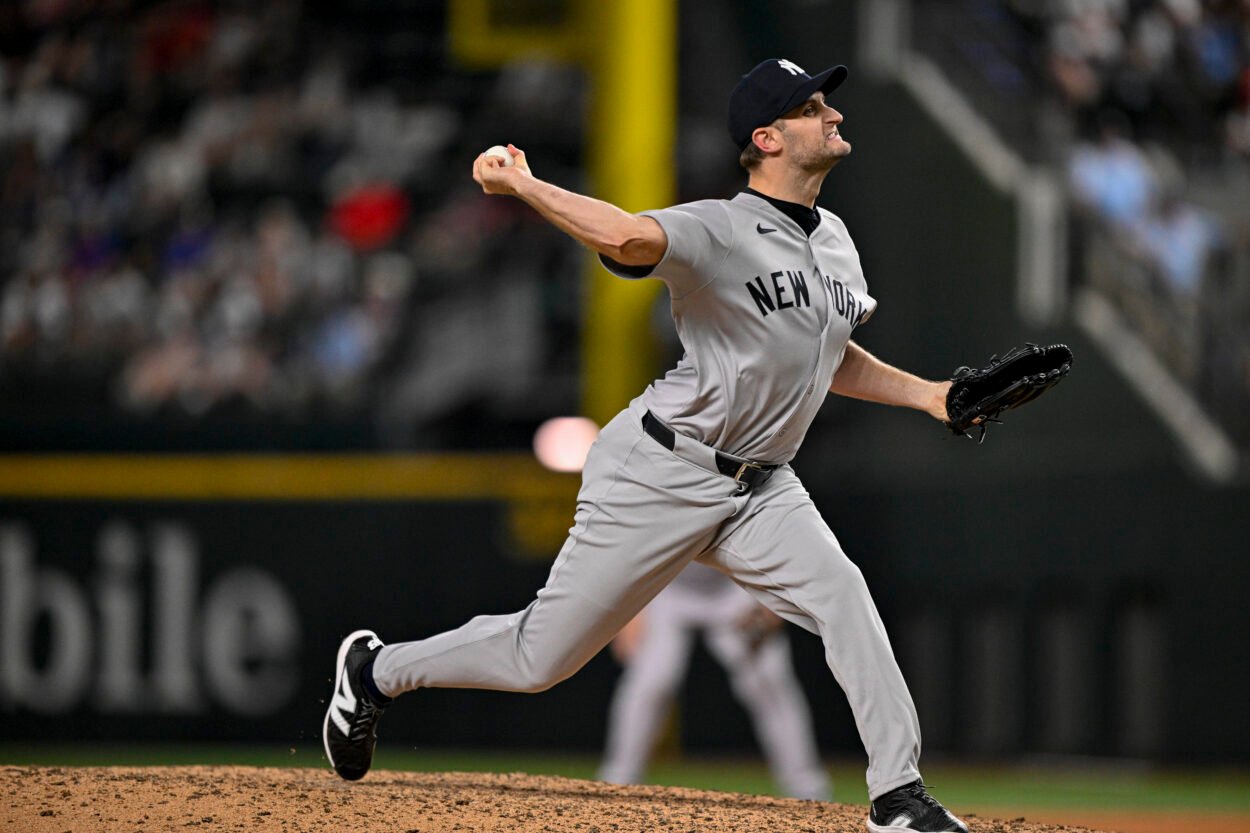
I’ll be the first to admit that when the Yankees traded for Jake Bird at the deadline, the immediate returns were horrific. We watched him step onto the mound in pinstripes and essentially implode, posting a catastrophic 27.00 ERA across just three appearances.
It looked like another Brian Cashman bargain bin dive gone wrong. But if you think I’m writing Bird off based on two innings of work, you haven’t been paying attention to how pitching coach Matt Blake operates. I am convinced that Bird is exactly the kind of “distressed asset” that this organization turns into a high-leverage weapon.
The Yankees didn’t acquire Bird for his surface stats; they acquired him because his raw metrics suggest he is a sleeping giant. The 30-year-old doesn’t blow you away with velocity—his 94.4 mph sinker sits right in the 50th percentile—but he wins with elite movement. His Breaking Run Value ranked in the 84th percentile last season, proving that his stuff is nasty enough to fool big-league hitters consistently.
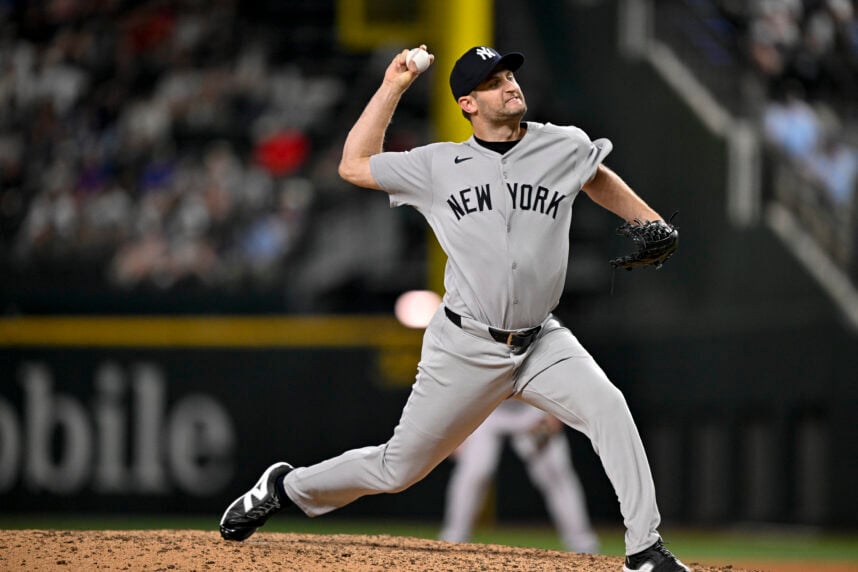
The Sinker Is Broken, but Yankees’ Matt Blake Knows How to Fix It
The problem isn’t the breaking ball; it’s the sinker. Last season, that pitch got hammered to the tune of a .337 average and a .542 slugging percentage. When your primary fastball is getting teed off on, it doesn’t matter how good your sweeper is. However, Blake has already identified the issue and, more importantly, the solution.
“Adjusted the sinker a little bit to kind of move the profile, hopefully limit some of the contact quality with the righties on that,” Blake explained recently. “But overall, it’s just going to be zone aggression for him and just trusting his stuff because he’s obviously had a really good start in Colorado in the first half and maybe ran some fatigue in the second half.”
This is classic Yankees optimization. They aren’t asking Bird to throw harder; they are tweaking the shape of the pitch to keep it off barrels. If he can sync that sinker up with his sweeper—which held batters to a .257 average—he becomes a nightmare to square up.
Zone Aggression Is the Key to Unlocking the Monster
The other red flag we have to address is the walks. Bird ranked in the 19th percentile for Walk Rate (10.1%), often nibbling because he didn’t trust his stuff in the zone. When you have “big shapes”—massive movement on your pitches—you can’t afford to be passive.
“I think the biggest thing was just trusting his stuff in the zone,” Blake said. “Think that him his stuff is he’s got really big shapes. So the big sweeper, big breaking ball, the pitches are moving a lot. So we’ve got to get him in the zone at a high rate and limit a lot of the walks.”
Bird is a ground-ball machine, sitting in the 70th percentile for Ground Ball Rate. That profile plays perfectly at Yankee Stadium. If Blake can get him to attack the zone and trust that the movement will generate weak contact, Bird goes from a deadline bust to a key piece of the 2026 bullpen puzzle. I’m betting on the talent, and I’m definitely betting on the coach.