
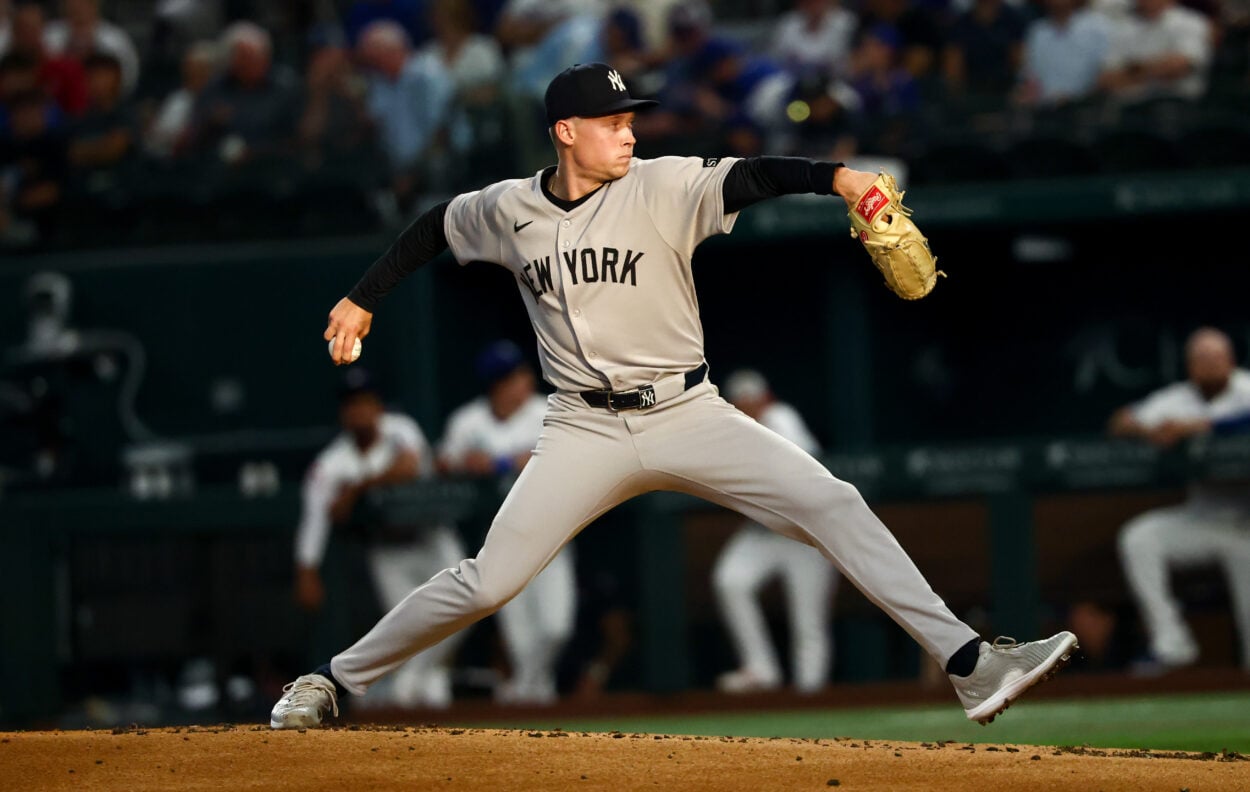
If the New York Yankees want to make an impact in the trade market, three names stand out above the rest: Will Warren, Luis Gil, and Elmer Rodriguez. However, they might be thinking about adding two starters rather than subtracting from their current pool of options. Let’s dive into Tuesday’s news and developments!
3 Yankees pitchers are quietly becoming valuable trade assets
The Yankees’ offseason has unfolded at a frustratingly slow pace, especially when contrasted with the Mets’ aggressive moves to upgrade their roster. Aside from retaining Trent Grisham on a qualifying offer, re-signing Amed Rosario, and taking a low-risk chance on Paul Blackburn, the Yankees have largely stood still — and arguably slipped backward — as rivals improve. That inertia feels especially dangerous given the roster’s clear flaws: an uncertain rotation, a thinned-out bullpen, and a lineup that still leans too heavily on a few stars.
Yet beneath the quiet lies a possible strategy. Brian Cashman appears to be stockpiling pitching depth with the intent of trading from it. Will Warren profiles as the most appealing “safe” trade chip: durable, controllable, and proven over a full season, even if his secondary pitches limit his ceiling. Luis Gil, meanwhile, represents the opposite — immense risk and diminished value after injuries and alarming command issues, making a trade now feel like selling low. Looming above both is Elmer Rodriguez, the 22-year-old breakout prospect whose rapid ascent has made him the crown jewel of the system and the key to landing a true impact player.
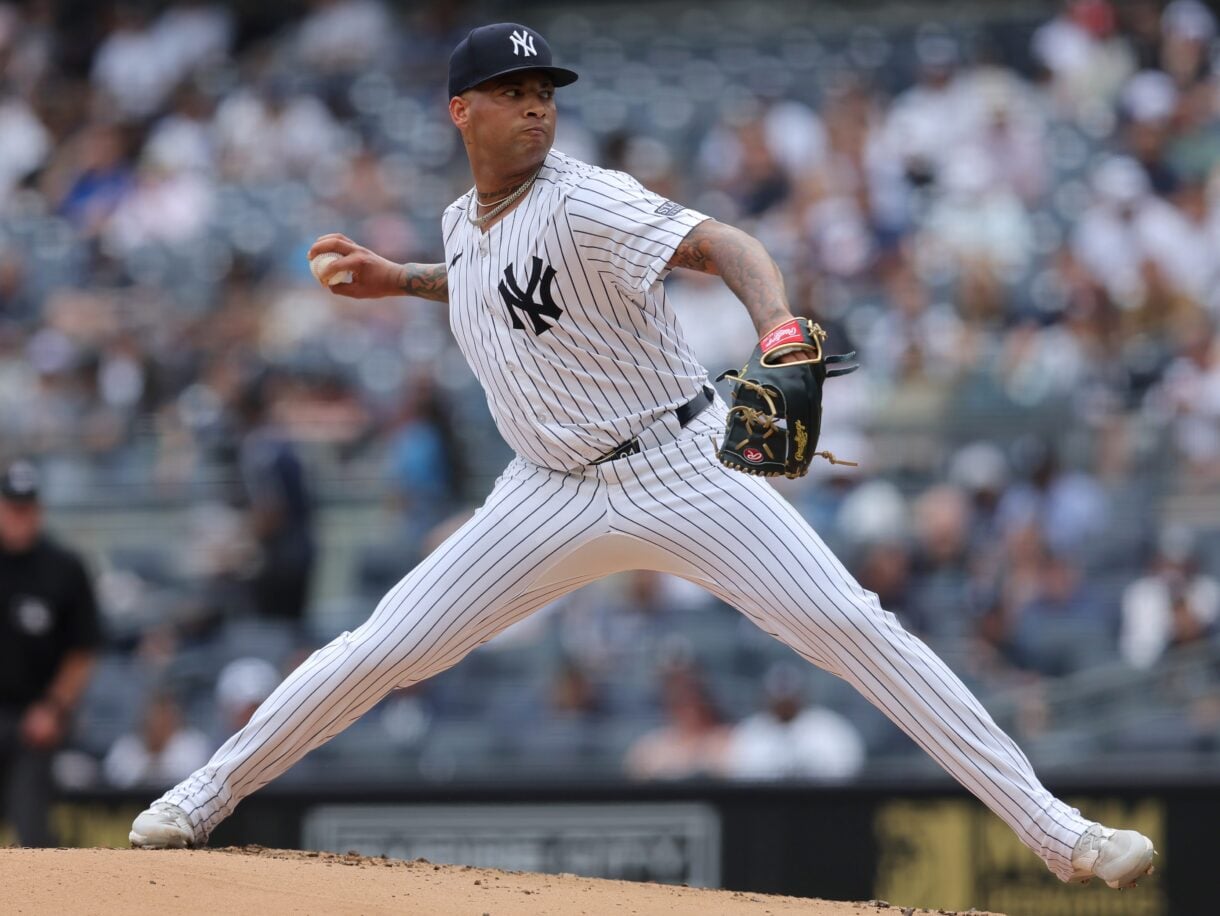
If the Yankees decide to strike, frontline starters like Freddy Peralta or Joe Ryan fit the bill, each offering a different way to stabilize and elevate the rotation. Cashman has the assets to act, but patience carries its own cost. With the rest of the league getting better, hoarding value without converting it into wins risks turning a calculated strategy into a missed opportunity.
The Yankees might need to add 2 starting pitchers this offseason
While much of the debate around the Yankees centers on offense, the more urgent concern may be their pitching depth — particularly with Spring Training approaching, historically the most dangerous time of year for arm injuries. The organization has already endured a wave of UCL surgeries and setbacks, and the current safety net behind the rotation is thin. Paul Blackburn, Elmer Rodriguez, and Brendan Beck are penciled in as next men up, but each comes with significant caveats that make relying on them risky.
Blackburn, in particular, is viewed internally as a reliever whose stuff plays better in short bursts, not as a starter who can soak up innings in April. Rodriguez may have the highest upside, but rushing a pitcher with minimal Triple-A experience could stunt his development. Beck offers competence but limited velocity, a shallow arsenal, and a long injury history. As constructed, the Yankees lack a true sixth starter — and history suggests they’ll need more than that.
The solution isn’t just adding one arm. The Yankees need both an impact starter to stabilize the top half of the rotation and additional depth to push fringe options down the ladder. Trade targets like Mets right-hander Justin Hagenman or low-risk free-agent bets such as Germán Márquez could provide flexible coverage without blocking young arms. Last season showed how vital sheer volume of capable starters can be. If the Yankees want to survive 162 games — and win in October — they’ll need to reinforce the rotation in layers, not just with one splashy addition.
Breaking down the final fortune the Yankees must pay Giancarlo Stanton
As the Yankees’ payroll threatens to eclipse $300 million in 2026, Giancarlo Stanton remains one of the most complicated variables on the books. While the team only pays $19 million of his salary in cash thanks to Miami’s contribution, his $22 million luxury tax hit is what truly constrains roster flexibility. With two guaranteed years remaining before a 2028 club option, Stanton’s contract continues to loom large as the front office tries to balance spending with contention.
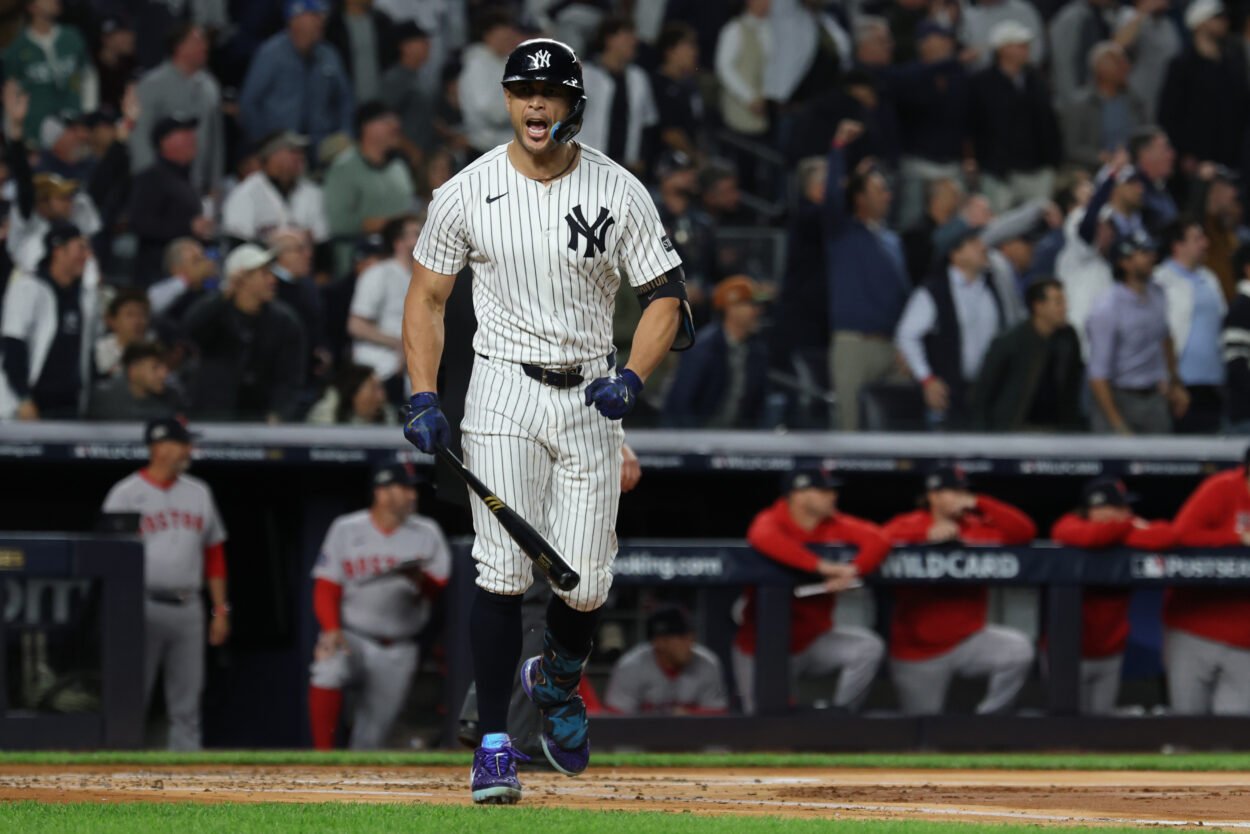
On the field, Stanton reminded everyone of his immense upside in 2025. In just 77 games, he delivered elite production, crushing 24 home runs with a 158 wRC+ and looking every bit like a middle-of-the-order force when healthy. Even so, durability remains the defining issue. He missed more than half the season, struck out at a high rate, and once again tested the team’s ability to plan around his availability.
That tension only grew in the postseason, where Stanton followed a dominant 2024 October with a baffling 2025 disappearance. As he ages into his late 30s, the Yankees are left hoping for flashes of vintage power while preparing for the likely reality that his contract will end with a buyout. Stanton’s tenure has been explosive, expensive, and endlessly polarizing — and it continues to shape how aggressively the Yankees can build the rest of their roster.