
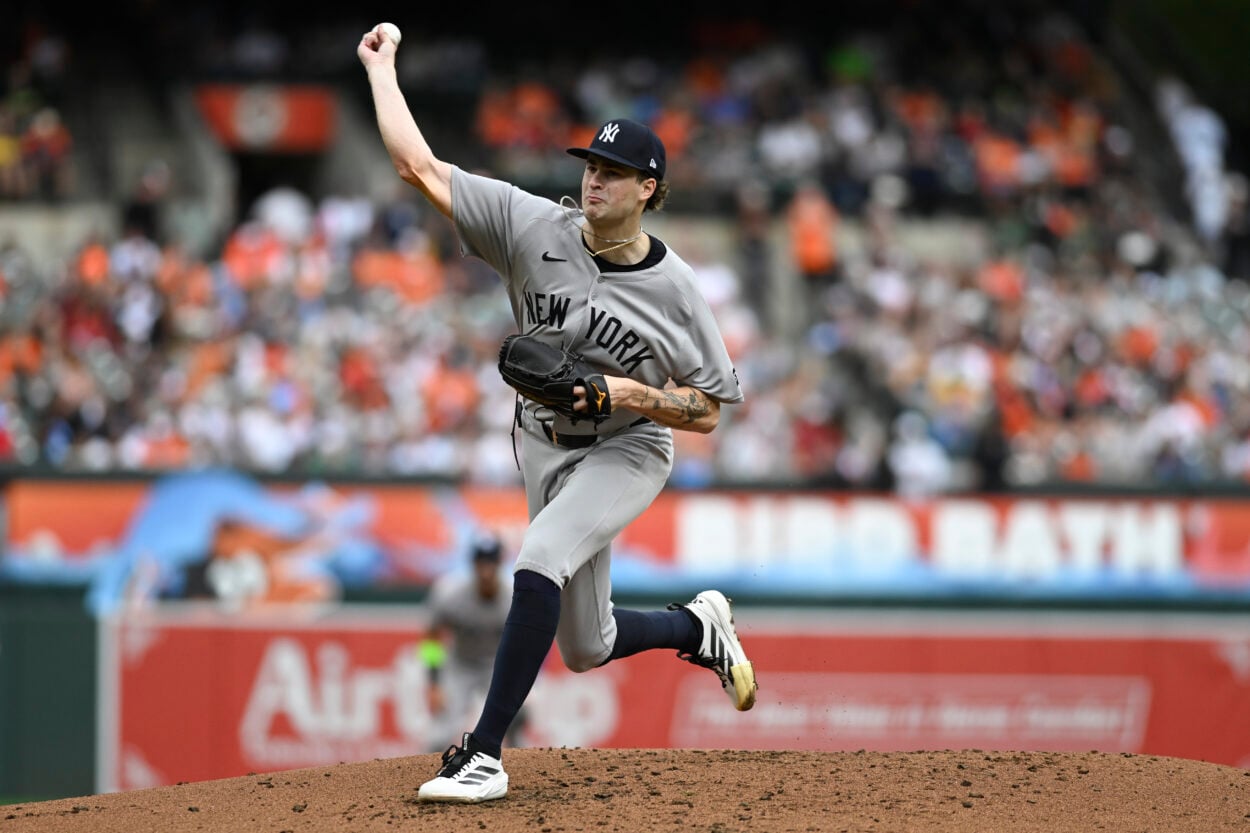
Ninety-eighth percentile in fastball velocity.
That is the kind of weapon that makes scouts drool and opposing hitters wake up in a cold sweat, and it belongs to the New York Yankees’ latest homegrown sensation, Cam Schlittler. The 24-year-old is preparing to take the league by storm in 2026, and the organization is confident they are sitting on a goldmine. But let’s be real for a second—throwing gas isn’t enough to survive as a starter in the American League East indefinitely.
Schlittler tossed 73 innings in his first MLB action in 2025, and the surface numbers were nothing short of electric. He opposed a 2.96 ERA with 10.36 strikeouts per nine innings. Those are ace-caliber metrics for a rookie. However, if he wants to evolve from a thrower into a pitcher, he has to stop relying on sheer velocity to bail him out of trouble.
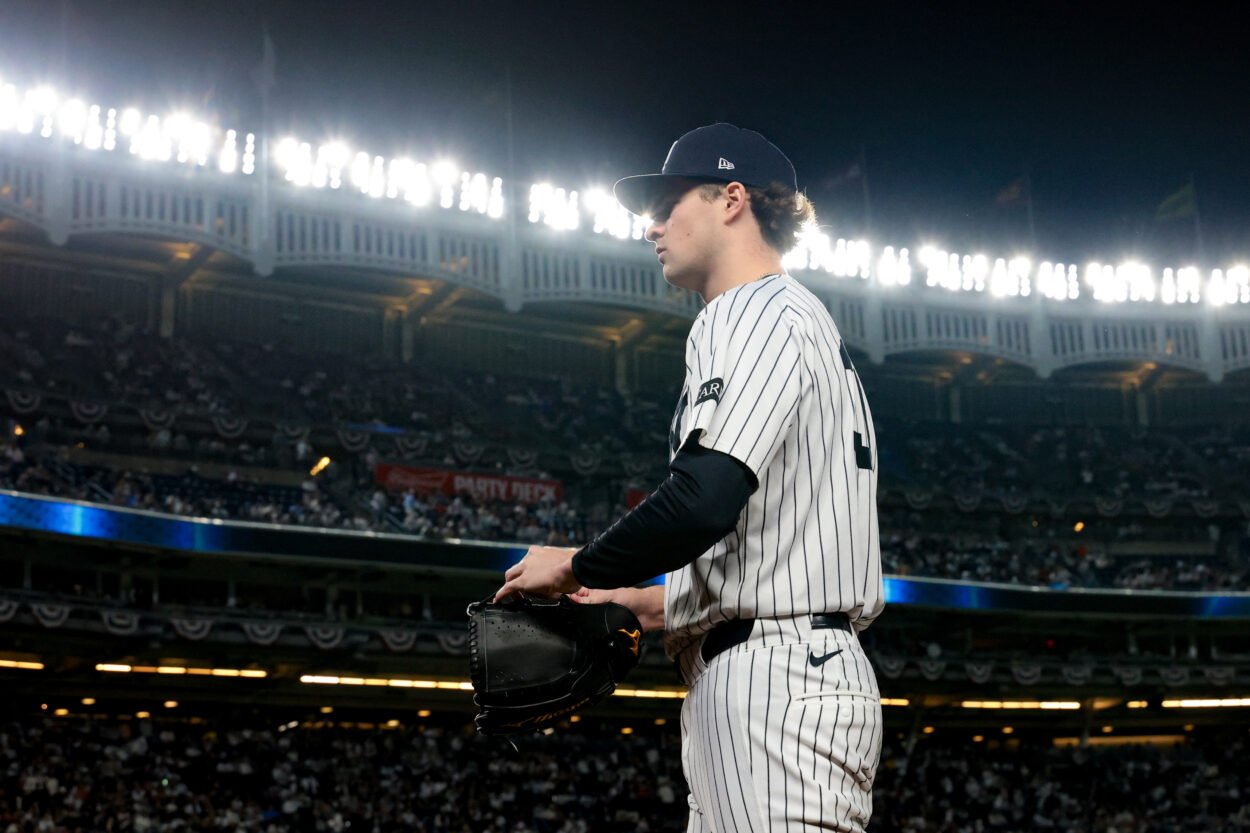
Cam Schlittler Must Evolve Beyond the Yankees Fastball
The kid leaned way too heavily on his fastball to do most of the damage last season. He collected 50 strikeouts on 54.7% usage, basically daring hitters to catch up to the heat. While they struggled—batters hit a paltry .178 against his four-seamer—teams are going to adjust.
Schlittler needs to have a good secondary option at his disposal because the league catches up to everyone eventually. He walked 3.82 batters per nine and needs to bring those free passes down while adding another strikeout pitch to his arsenal. He already ranks in the 95th percentile in fastball velocity, averaging 98 mph, but he needs more chases and whiffs to pair with his 82nd percentile strikeout rate. You can’t live in the zone with just one pitch, even if it is a flamethrower.
The Matt Blake Plan for a New Weapon
According to Gary Phillips of the New York Daily News, the expectation is that Schlittler is going to add either a change-up or a splitter to diversify his portfolio. This isn’t just speculation; it is a calculated development plan from the pitching lab.
“Schlittler, who also has a sinker and slider, said he was still deciding on which pitch to develop. However, Yankees pitching coach Matt Blake told The News that the changeup is more likely after Schlittler struggled with the pronation of his wrist while tinkering with a splitter last spring.”
The change-up is the more realistic option. A splitter seems to be a bit too complicated for him to introduce right now, but a change-up allows him to tunnel with his fastball. If he can make a 98 mph heater and a diving off-speed pitch look identical out of the hand, he becomes unhittable.
Fixing the Curveball is Critical for New York
While the focus is on the new toy, Schlittler has to clean up the junk he already throws. He currently possesses a curveball at 83.3 mph, but let’s be honest—it’s not necessarily a good one. It provided a .275 batting average and a .353 slugging rate against last season.
That pitch is currently a liability. Compare that to his cutter, which moved almost like a slider at 91.9 mph and held batters to a .204 average. The path to dominance is clear: keep the cutter, fix the curve, and develop the change-up.
A Financial Grand Slam for the Yankees
If Schlittler figures this out, the Yankees aren’t just getting a good pitcher; they are getting five years of dominance on a budget. He has less than one year of service time accumulated, meaning he will only be a free agent in 2032.
That level of team control is arguably the most valuable asset in the sport. The Yankees are looking at one of the league’s next big-time young pitchers if they develop his arsenal correctly. If they fail, he will be a boom or bust player on any given night. But if Matt Blake works his magic and that change-up lands, Schlittler becomes the homegrown ace that saves Brian Cashman $300 million on the open market.