

The Yankees are understandably doing their due diligence on every big name available, but just because you check the price tag doesn’t mean you should buy the car—especially when the check engine light is already flickering.
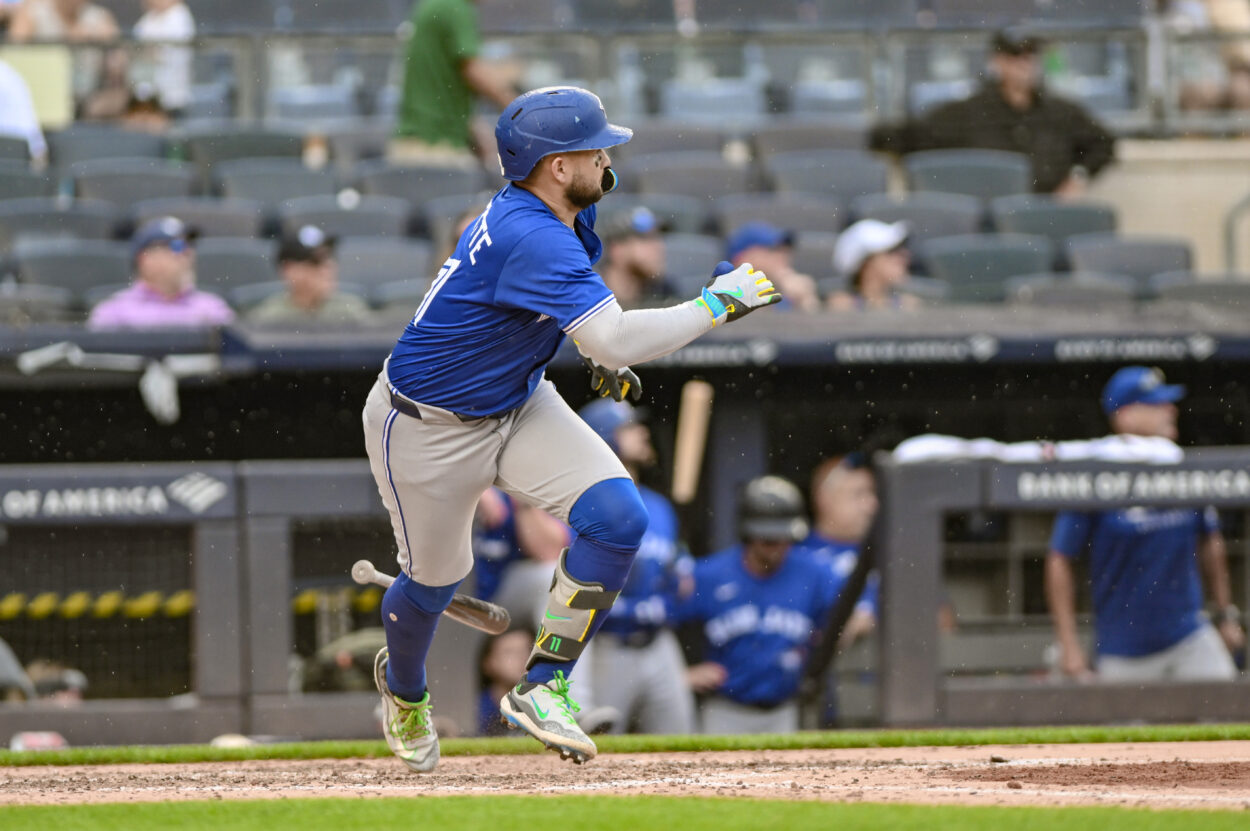
Reports indicate that the Bombers have checked in on free agent Bo Bichette, a move that theoretically adds a high-contact bat to a lineup that desperately needs one. However, digging deeper into his profile reveals a field of red flags that make his projected five-year, $150 million contract look like a potential albatross before the ink even dries.
While asking if the Yankees should seriously consider a pursuit of Bo Bichette is a valid question given his pedigree, the answer should be a resounding “no.” Paying $30 million annually for a player whose physical tools are evaporating at age 27 is the kind of mistake that haunts payrolls for half a decade.
The Offense Is Shiny, But the Engine Is Sputtering
On the surface, Bichette looks like an offensive savior. In 2025, he slashed .311/.357/.483 across 582 at-bats, launching 18 home runs and posting an .840 OPS. His 134 wRC+ indicates he was 34% better than the league-average hitter, a number that would undoubtedly lengthen the Yankees’ lineup. His elite bat-to-ball skills remained intact, evidenced by a low 14.5% strikeout rate and an ability to make contact even when he chases pitches out of the zone.
However, the underlying metrics tell a scary story about his future. Bichette’s bat speed has plummeted to the 12th percentile, suggesting that his ability to catch up to elite velocity is fading. While he doesn’t whiff often, his reliance on hand-eye coordination over raw bat speed is a dangerous profile as he ages, especially since he chases pitches relentlessly.
A Defensive Liability with Nowhere to Hide
The primary reason to stay away, however, is that Bichette simply cannot play the position he is being paid to play. His athleticism is in freefall, ranking in the 1st percentile for both Range and Outs Above Average (OAA) last season, where he collected a dismal -13 OAA. He is essentially a statue at shortstop, and a move to third base isn’t a viable solution either; his arm strength sits in the 36th percentile, far below the threshold required for the hot corner.
The algorithm hides the best New York Yankees news; make sure you pin Empire Sports Media on Google News so you don’t miss a beat.
His sprint speed has also regressed to the 21st percentile, confirming that his days as a dynamic athlete are over. The only defensive home for him is second base, but the Yankees have historically been resistant to handing out massive long-term contracts to that position. Does it really make sense to trade Jazz Chisholm Jr.—an actual athlete—just to pay Bichette $150 million to be a defensively limited second baseman?
Focus on the Real Priority: Cody Bellinger
The Yankees have bigger fish to fry than gambling on a regressing infielder. The front office is clearly locked in on retaining their own star, as the Yankees reportedly submitted an official offer for Cody Bellinger this week. Bellinger offers the defensive versatility, athleticism, and power that Bichette currently lacks.
With the Yankees firm on their price, Cody Bellinger is still likely to return, and allocating resources to him is a far safer investment. Bichette’s durability is also a major concern—he hasn’t played 150 games since 2022, logging just 81 games in 2024 and 139 last season. The Yankees need reliability, not a $150 million headache waiting to happen.