
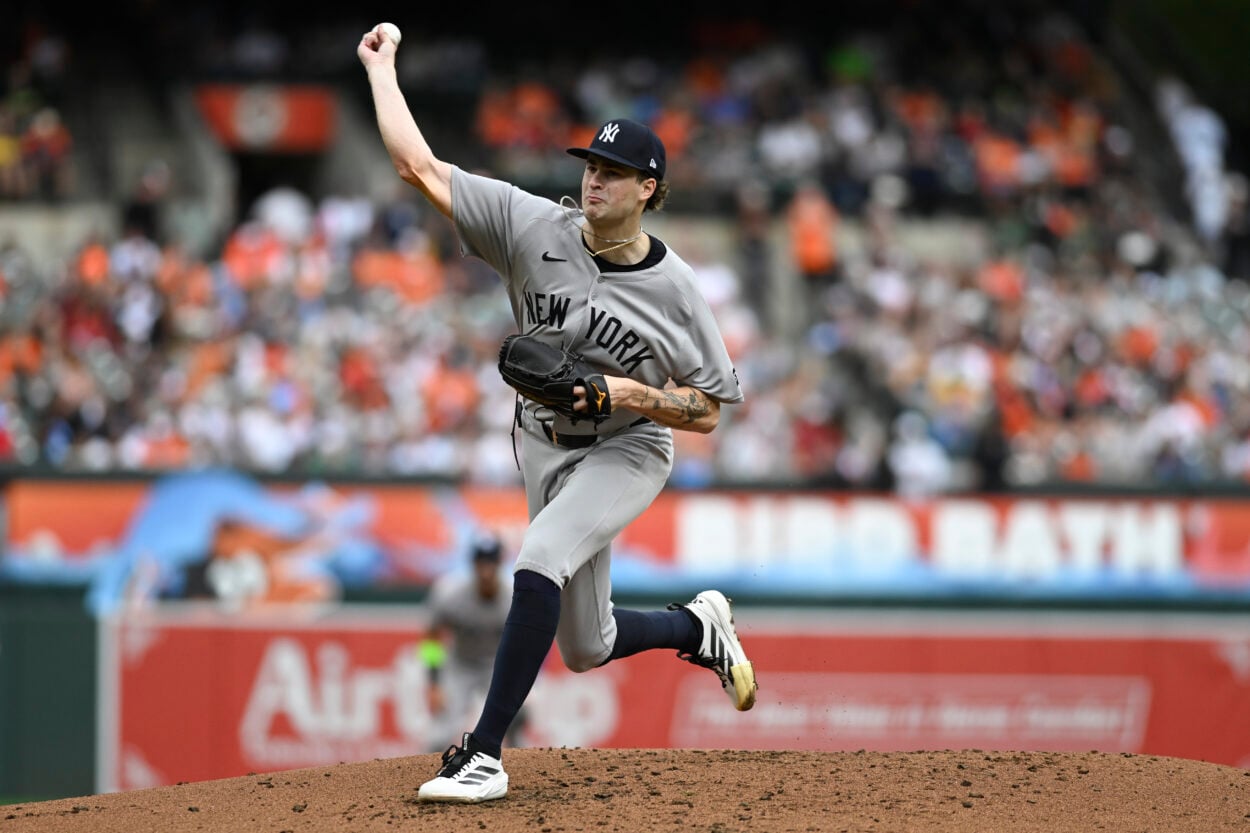
The Yankees are entering the 2026 season with championship aspirations, but their starting rotation is already limping before a single pitch has been thrown in Spring Training. While the lineup remains solid, assuming they retain Cody Bellinger, the pitching staff has been decimated by a series of unfortunate injuries to key contributors, forcing General Manager Brian Cashman and Manager Aaron Boone to scramble for solutions.
The team is staring down a reality where their ace, Gerrit Cole, will likely miss the first month of the regular season as he finishes rehabilitating from Tommy John surgery.
To make matters worse, Carlos Rodón is expected to miss time after undergoing surgery to remove a bone chip in his throwing elbow, and Clarke Schmidt is sidelined for the majority of the 2026 campaign following his own Tommy John procedure.
The algorithm hides the best New York Yankees news; make sure you pin Empire Sports Media on Google News so you don’t miss a beat.
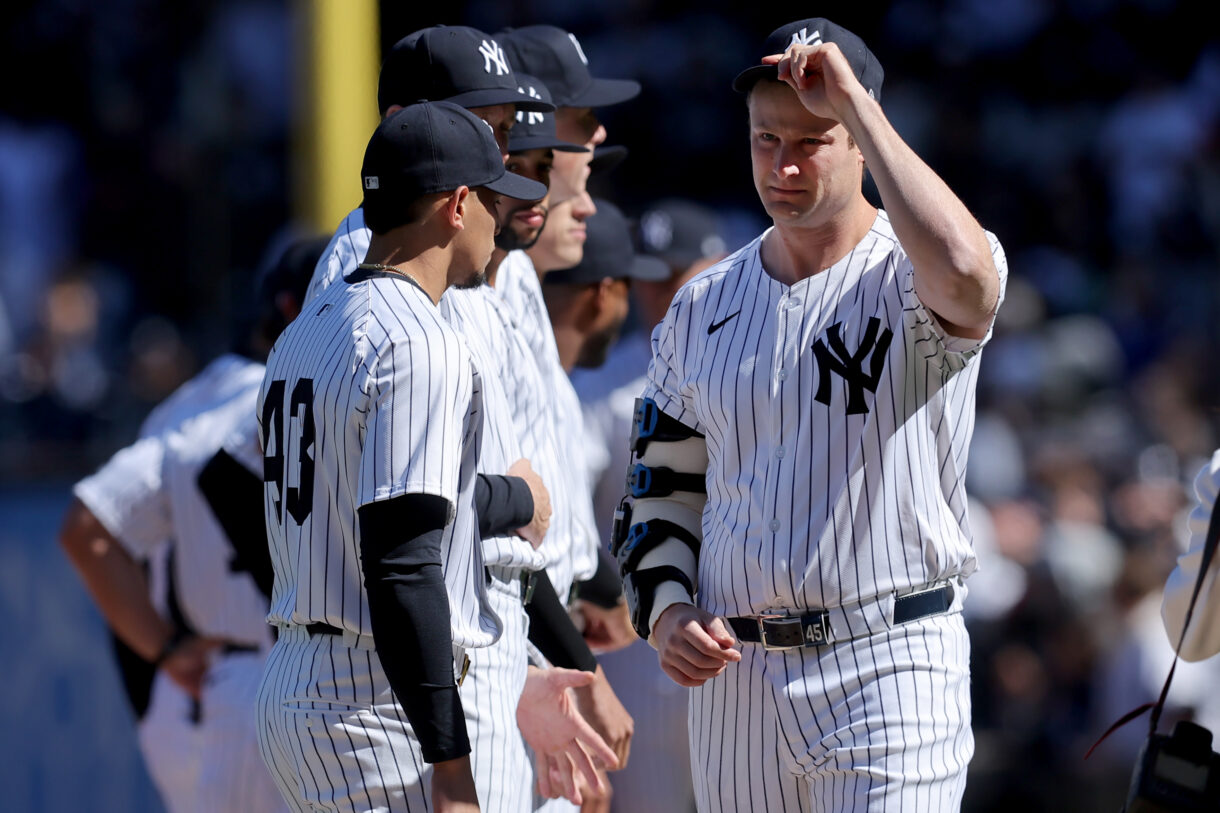
The Yankees Are Facing a Starting Pitching Crisis in 2026
This cascade of medical setbacks has left the Yankees with a rotation that looks vastly different from the one they envisioned. The only truly healthy, established arms currently projected for the Opening Day roster are Max Fried, who will be tasked with carrying the heavy load of an ace, and the volatile duo of Luis Gil and Will Warren.
Relying on such a young and unproven group to navigate the treacherous waters of the American League East is a massive gamble. The team is essentially asking a group of rookies and sophomores to hold the fort until the cavalry arrives in May or June. However, amidst this uncertainty, one name has emerged not just as a stopgap, but as a potential frontline starter who could alter the franchise’s trajectory: Cam Schlittler.
Cam Schlittler Has Emerged as a Legitimate Ace Option
The Yankees believe that Schlittler could be an ace in the majors, and based on the sample he gave them last year, that is a worthwhile discussion.
The 24-year-old right-hander was a revelation in 2025, throwing 73 innings for the Yankees and posting a tremendous 2.96 ERA. He didn’t just survive; he thrived, racking up strikeouts at an elite clip with 10.36 strikeouts per nine innings while stranding runners with an impressive 84.5% left-on-base rate. His ability to limit damage was further evidenced by a solid 36.4% ground ball rate, keeping the ball in the yard when he wasn’t missing bats entirely.
His dominance reached a fever pitch in the playoffs, where he truly announced himself to the baseball world. Over 14.1 postseason innings, Schlittler posted a microscopic 1.26 ERA, highlighted by a legendary performance against the Boston Red Sox where he struck out 12 batters. That outing proved he has the mental fortitude to handle the bright lights of October, a trait that cannot be taught.
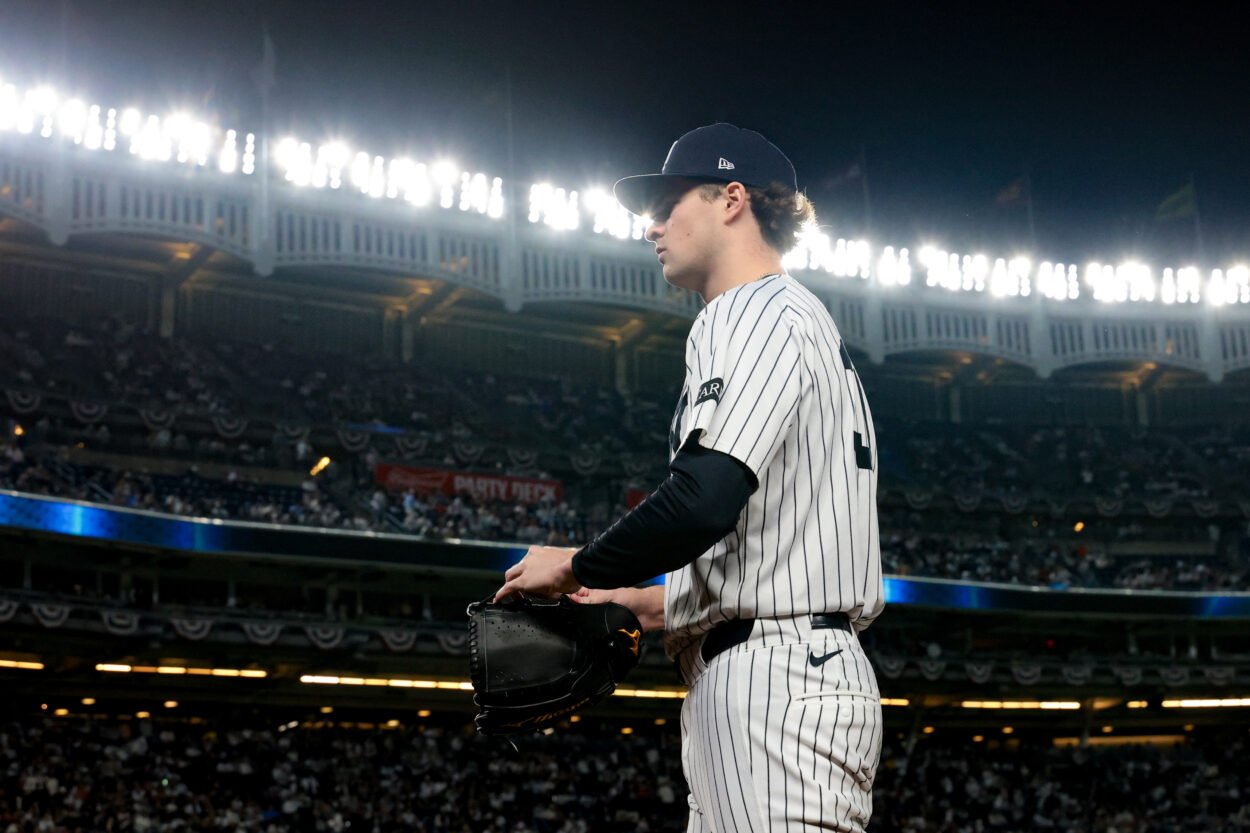
Analyzing the Elite Velocity and Fastball Dominance
What makes Schlittler such a tantalizing prospect is his raw stuff. He possesses a fastball that is genuinely elite, regularly touching triple digits and averaging 98.0 mph, which placed him in the 95th percentile for fastball velocity last season.
This isn’t a pitch he has to save for big moments; he attacks hitters with it relentlessly. In 2025, he struck out 52 batters with his four-seamer alone, relying on it for over 50% of his pitches against both lefties and righties. When a pitcher can sit at 98 mph deep into games, he has a margin for error that few others possess.
The Development of Secondary Pitches Is Critical for Success
However, for Schlittler to ascend from a “thrower” to a true “pitcher,” he is simply in need of refinement with his secondary options. While his heater is world-class, his supporting cast of pitches is still a work in progress. He struck out only 16 batters with his cutter and just 13 with his curveball last season, numbers that need to improve if he wants to navigate lineup turnovers efficiently. His curveball, in particular, was a liability at times, as opposing batters posted a .275 batting average against it.
His cutter shows promise, averaging 92 mph—fantastic velocity for that specific pitch type—and moving with slider-like action. It serves as a solid bridge pitch, but he lacks a consistent “put-away” weapon that isn’t his fastball. Major league hitters eventually time up velocity if they don’t have to respect a speed differential, and that is where Schlittler’s current arsenal falls short.
Why Developing a Change-Up Is the Final Piece of the Puzzle
Recognizing this hole in his game, the Yankees have been working diligently on developing his change-up this offseason. If he can add an effective change-up to pair with his blistering four-seamer, he should be able to create tunneling and deception that will allow him to dip into his bag of pitches to create strikeouts without maxing out his arm on every throw. A reliable change-up would keep hitters off-balance, making 98 mph look like 102 mph and generating weak contact when they try to adjust.
With his velocity and the ease of his delivery, there is no question that Schlittler could be an ace in the MLB. He has the physical tools that scouts dream of; he just needs to keep growing and, most importantly, stay healthy.
The Internal Pipeline Offers Additional Hope
While Schlittler is the primary focus, he isn’t the only internal solution the Yankees are banking on. The organization remains high on their farm system’s ability to produce impact arms.
In fact, the Yankees might have a secret rotation weapon in Elmer Rodriguez, another young pitcher with high upside who could contribute if the injury bug continues to bite. Combining Schlittler’s breakout potential with depth pieces like Rodriguez gives New York a fighting chance to survive the early-season storm. If Schlittler can refine his secondaries and take that next step, the Yankees might just find that their rotation is stronger than anyone expected.