
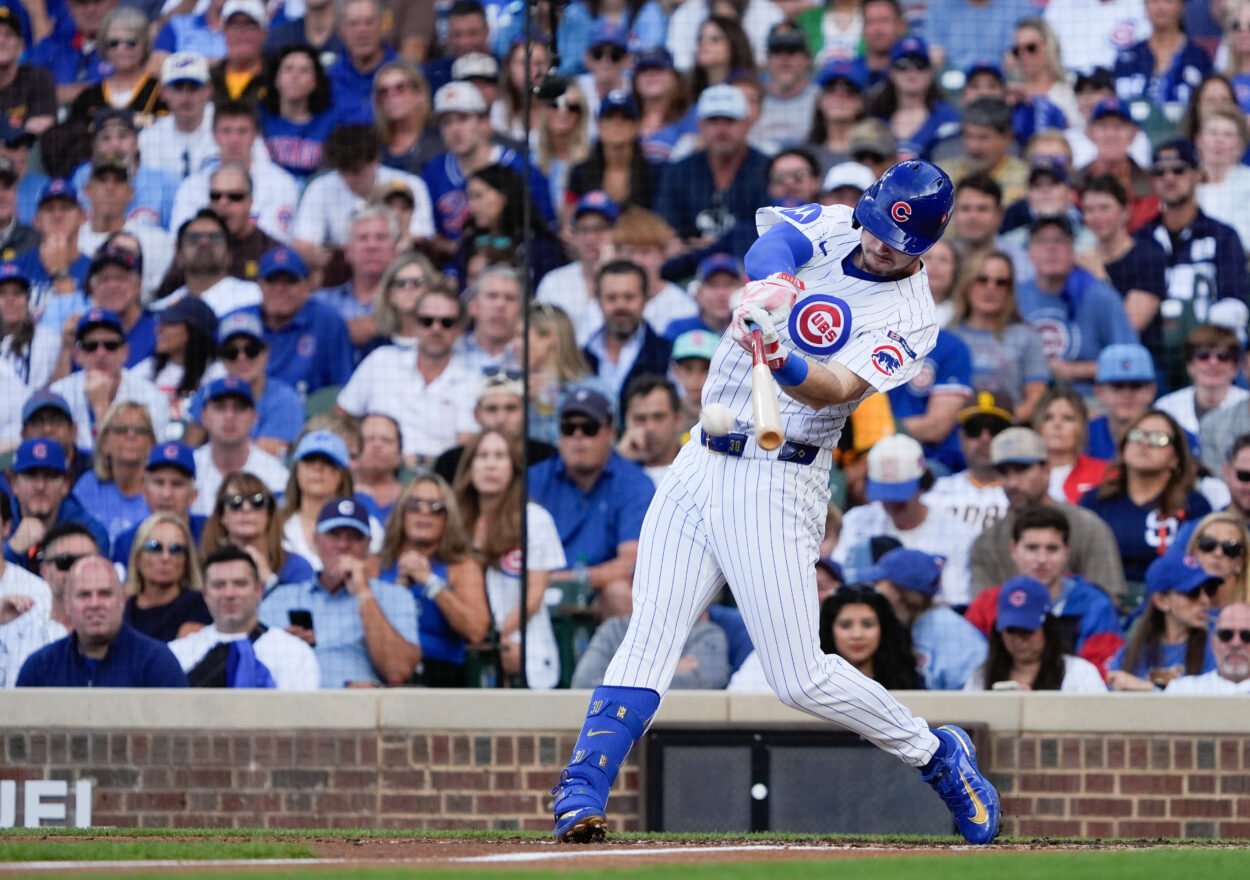
The Mets didn’t just lose a bidding war on Thursday; they were effectively used as leverage in a masterclass of financial gymnastics by the Los Angeles Dodgers. For days, it appeared all but certain that star outfielder Kyle Tucker was heading to Queens to anchor the middle of the lineup.
Instead, Tucker pivoted at the eleventh hour, agreeing to a four-year, $240 million contract with Los Angeles that carries a staggering $60 million average annual value. While the headline number is eye-popping, the structure of the deal—specifically the heavy use of deferrals—has left the Mets empty-handed and furious.
In theory, the Mets put the superior offer on the table. Their proposal included no deferrals, a massive front-loaded payout, and a larger signing bonus designed to give Tucker immediate liquidity.
However, the Dodgers countered with a deal that technically pays Tucker $20 million more in total value by the end of the contract but defers the majority of that cash far into the future. This structure allows Los Angeles to invest the withheld money, generating profit that offsets the cost, while Tucker eventually collects a larger gross sum. It is a “have your cake and eat it too” strategy that circumvented the Mets’ aggressive straight-cash approach.

The Deferral Loophole Is a Ticking Time Bomb
This isn’t just about losing a player; it is about the broken economics of the sport. Deferrals have become a massive loophole in contract building, allowing big-market teams like the Dodgers to hoard superstars while technically managing their immediate cash flow. This tactic is expected to be a primary talking point when the Collective Bargaining Agreement expires in the upcoming 2027 offseason, but that doesn’t help the Mets right now. They are left holding the bag with a “demolished” outfield and a surplus of cash that no one seems to want.
The algorithm hides the best New York Mets news; make sure you pin Empire Sports Media on Google News so you don’t miss a beat.
The Pivot: Money for Bellinger or a Reunion with Bader?
With Tucker off the board and the outfield depth chart looking bleak, President of Baseball Operations David Stearns has to pivot immediately. The most obvious, albeit expensive, solution is to throw money at Cody Bellinger. The former Yankee had a resurgence in the Bronx in 2025, slashing .272/.334/.480 with 29 home runs and 98 RBIs. While there are concerns about his metrics regressing away from Yankee Stadium’s short porch, he offers the kind of left-handed power and defensive versatility the Mets desperately need to replace Tucker’s projected production.
Alternatively, the Mets could look to stabilize the defense by reuniting with former Met Harrison Bader. Bader is coming off a surprisingly solid 2025 campaign split between Minnesota and Philadelphia, where he hit .277 with 17 home runs and posted a .796 OPS. While he doesn’t offer Tucker’s offensive ceiling, Bader brings elite, Gold Glove-caliber defense in center field, a known commodity in Queens after his tenure there in 2024.
The Mets, on paper, are still a good team, but “good” doesn’t win the NL East. They need another starting pitcher and a legitimate outfield bat, and with their primary target now wearing Dodger blue, the front office is officially on the clock to save the offseason.