
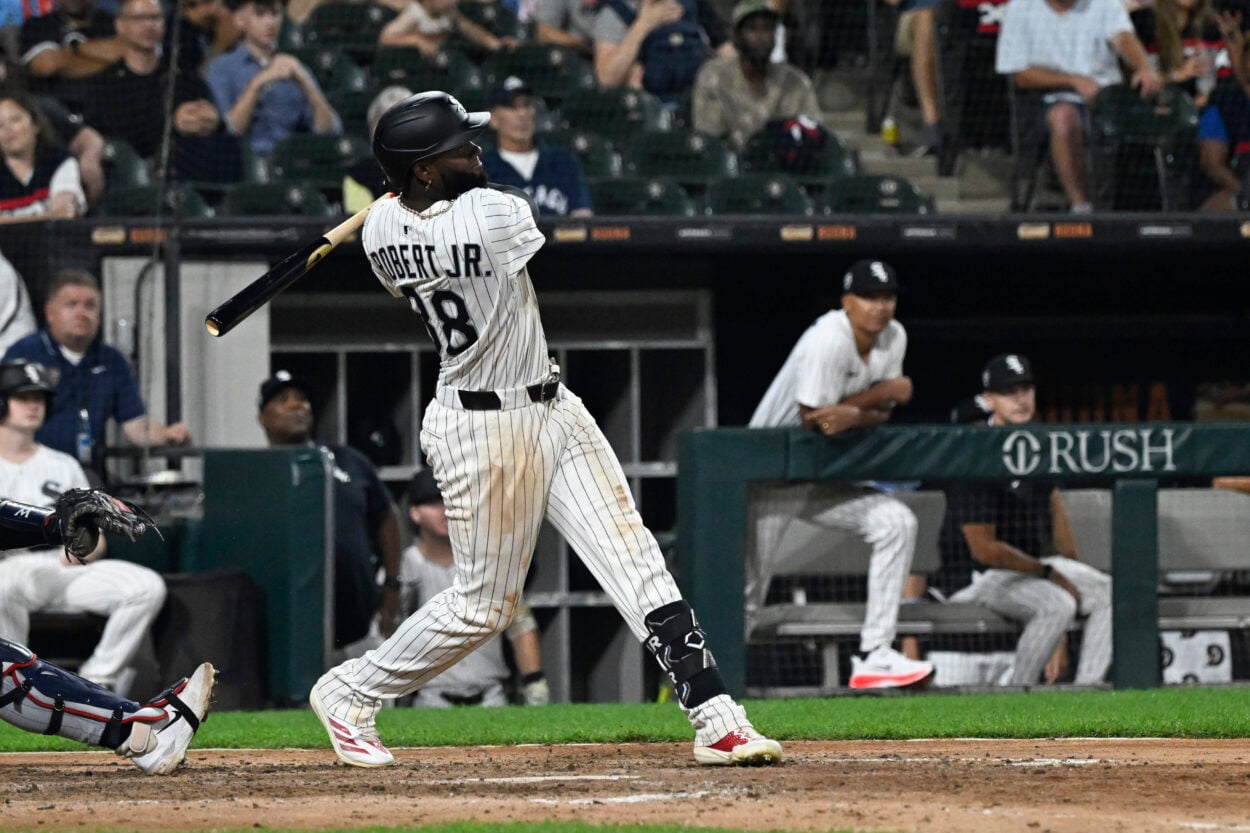
The New York Mets continued their aggressive offseason retooling on Tuesday night, executing a trade that brings one of the most enigmatic talents in baseball to Queens. According to multiple reports, the Mets have acquired outfielder Luis Robert Jr. from the Chicago White Sox in exchange for utility prospect Luisangel Acuña and right-handed pitcher Truman Pauley.
The move signals a clear desire from President of Baseball Operations David Stearns to inject elite upside into the roster, even if it comes with significant risk. Robert Jr., now 28, is approaching the end of a seven-year, $68 million contract that includes a club option for 2027, giving the Mets potential control for two seasons if he can rediscover his All-Star form.
A Tale of Two Halves
Robert Jr.’s 2025 campaign was a statistical rollercoaster that likely depressed his trade value enough for the Mets to strike. Over the full season, his numbers were underwhelming: a slash line of .223/.297/.364 with 14 home runs, 53 RBIs, and an 84 wRC+, meaning he was 16% worse than the league-average hitter. His plate discipline issues were glaring, evidenced by a 26% strikeout rate and a 9th percentile Whiff rate that highlights his struggles to make contact.
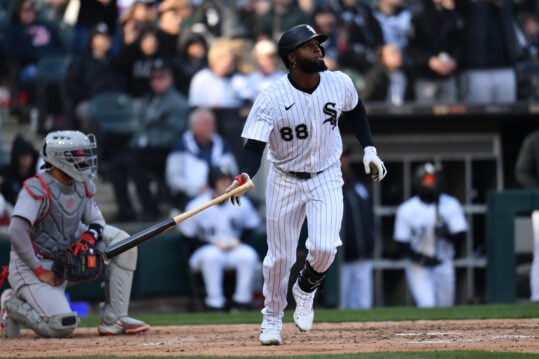
However, the Mets are banking on the version of Robert Jr. that emerged after the All-Star break. During the second half of the season, he looked like a completely different player, slashing .298/.352/.456 with an .808 OPS. That resurgence provides hope that his elite tools—specifically a 92nd percentile Bat Speed—can still translate into elite production if he can simply square up the ball more consistently.
Elite Defense and Speed Center the Profile
While the bat remains a volatile variable, Robert Jr.’s physical tools are undeniable. He instantly upgrades the Mets’ defense up the middle, ranking in the 93rd percentile for Range (Outs Above Average) last season. This elite range allows him to cover the vast real estate of center field effectively, a crucial need for the Mets’ pitching staff.
Additionally, he brings electric speed to the basepaths. Robert Jr. swiped 33 bases in 2025, supported by a 90th percentile Sprint Speed. His 76th percentile Baserunning Run Value proves he can impact games with his legs even when he isn’t driving the ball out of the yard.
The algorithm hides the best New York Mets news; make sure you pin Empire Sports Media on Google News so you don’t miss a beat.
What This Means for the Rest of the Offseason
The arrival of Robert Jr. seemingly locks down center field, leaving left field as the only sizable gap remaining in the lineup. While the Mets are technically still in the mix for free agent Cody Bellinger, acquiring Robert Jr. makes a massive expenditure on another outfielder significantly unlikely.
Instead, the focus will likely shift entirely to stabilizing the rotation. With the offense and defense now bolstered by high-ceiling athletes like Robert Jr. and the recently signed Bo Bichette, the Mets can turn their financial firepower toward landing a frontline starter. This trade is a quintessential “boom-or-bust” gamble, but if Robert Jr. booms, the Mets just acquired a superstar for pennies on the dollar.