
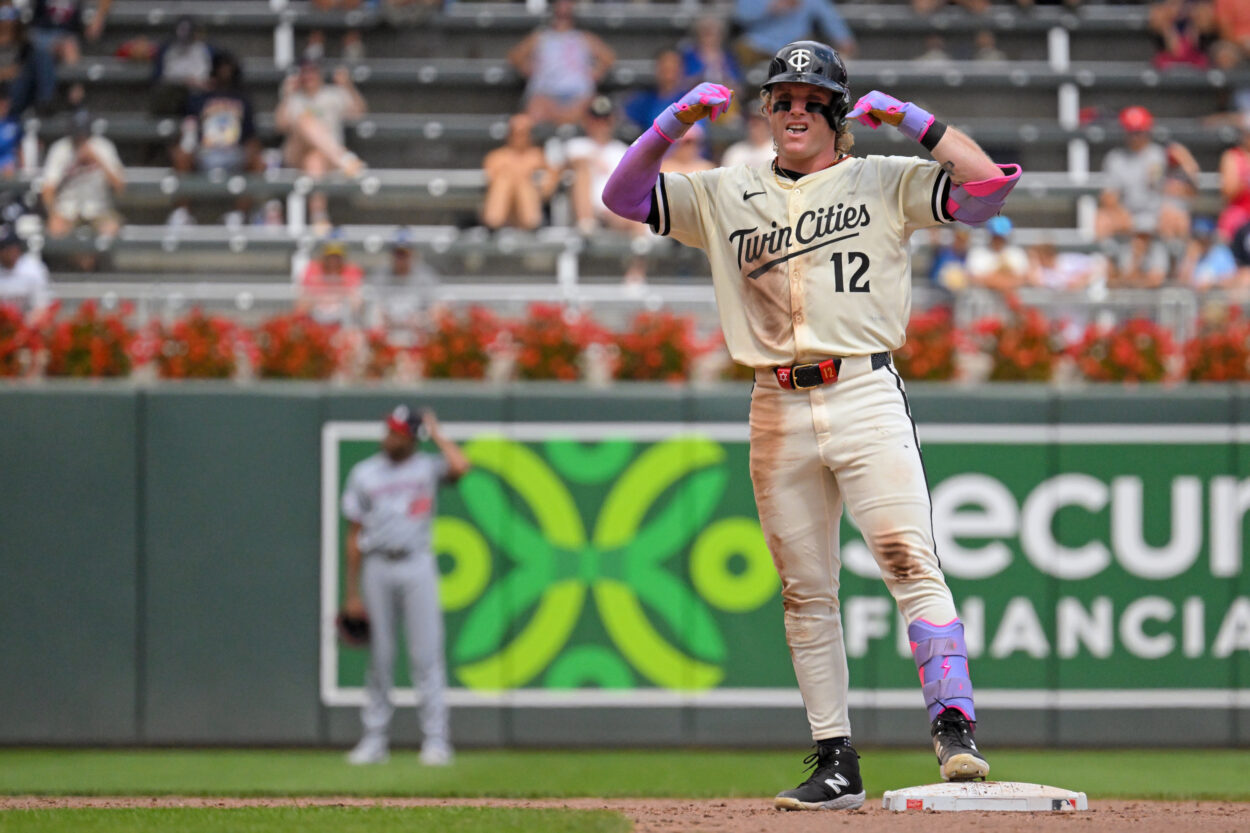
By mid-January, you can usually tell how an offseason feels by what is still missing. In Queens, the gaps are loud enough to hear over the construction noise.
The New York Mets have been active, but not complete. Three areas still stand out every time you scan the roster: a frontline starter, bullpen depth that can actually survive October innings, and an outfield that suddenly looks thin in a hurry. There is also a case for first base help alongside Jorge Polanco.
The outfield, though, is the one that keeps circling back. It is not just thin. It is hollowed out.
An Outfield That Lost Its Spine
Over the course of the offseason, the Mets lost Brandon Nimmo, Jose Siri, Cedric Mullins, and Jeff McNeil. That is almost an entire outfield rotation wiped clean, leaving Juan Soto and Tyrone Taylor as the only familiar names still standing.
Taylor can help. He just should not be asked to do everything. He profiles best as a part-time piece, the kind of player who strengthens a roster instead of carrying it. Carson Benge remains a long-term investment, not someone you rush into daily center-field duty before he is ready.
That reality leaves the Mets with an urgent need for at least one starting-caliber outfielder, and ideally two. Center field matters most, not just for defensive stability but for lineup balance. That is where Harrison Bader starts to feel less like a rumor and more like an inevitability.
Why Harrison Bader Fits the Mets So Cleanly
Bader already knows Queens. He was a key cog on the magical 2024 Mets team that pushed all the way to the National League Championship Series, a run defined by defense, athleticism, and timely swings. He left an impression that lasted longer than the season.
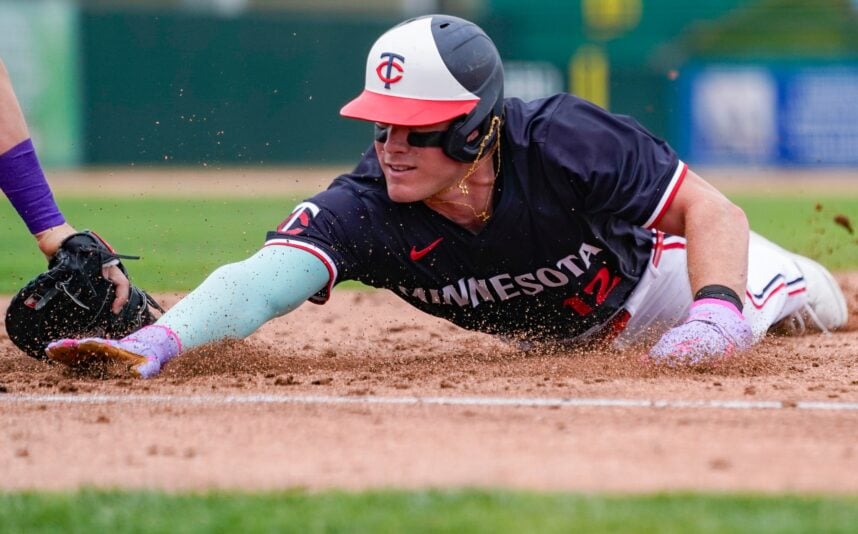
His 2025 only strengthened the case. Between stops with the Minnesota Twins and the Philadelphia Phillies, Bader quietly produced one of the better offensive seasons of his career. He posted a 118 wRC+ in 307 plate appearances with Minnesota, then raised it to 129 across 194 trips to the plate in Philadelphia.
When you zoom out, the full season line holds up. A 122 wRC+, 17 home runs, 11 stolen bases, and 3.2 fWAR. That came with rock-solid defense in center field and the flexibility to handle corner spots without issue.
For a Mets team that suddenly needs reliability more than flash, that profile matters.
The Ceiling Play and the Safety Net
If the Mets somehow land Kyle Tucker, the conversation changes quickly. An outfield of Tucker, Bader, and Soto would go from weakness to strength overnight, arguably one of the best groups in Major League Baseball. Soto is locked into right field for the next 14 years, and everything else can be built around that certainty.
The Mets know the competition for Tucker is fierce. There is no guarantee they win that fight. That is exactly why Bader makes so much sense regardless of how the superstar chase ends.
Even if Bader’s bat settles closer to league average than his 2025 output, the floor is still valuable. He brings center-field defense, baserunning, and playoff experience. He stabilizes the roster instead of forcing younger players or role guys into uncomfortable responsibilities.
This is what smart roster construction looks like. You do not wait for perfection before fixing the obvious problems.
A Move That Reflects Where the Mets Are
The New York Mets are not rebuilding. They are recalibrating. That means identifying players who raise the baseline while still leaving room for bigger swings.
Harrison Bader does exactly that. He fits the roster, the timeline, and the clubhouse. If the Mets are serious about turning unfinished business into a finished product, this is the kind of move that quietly pushes them closer.