
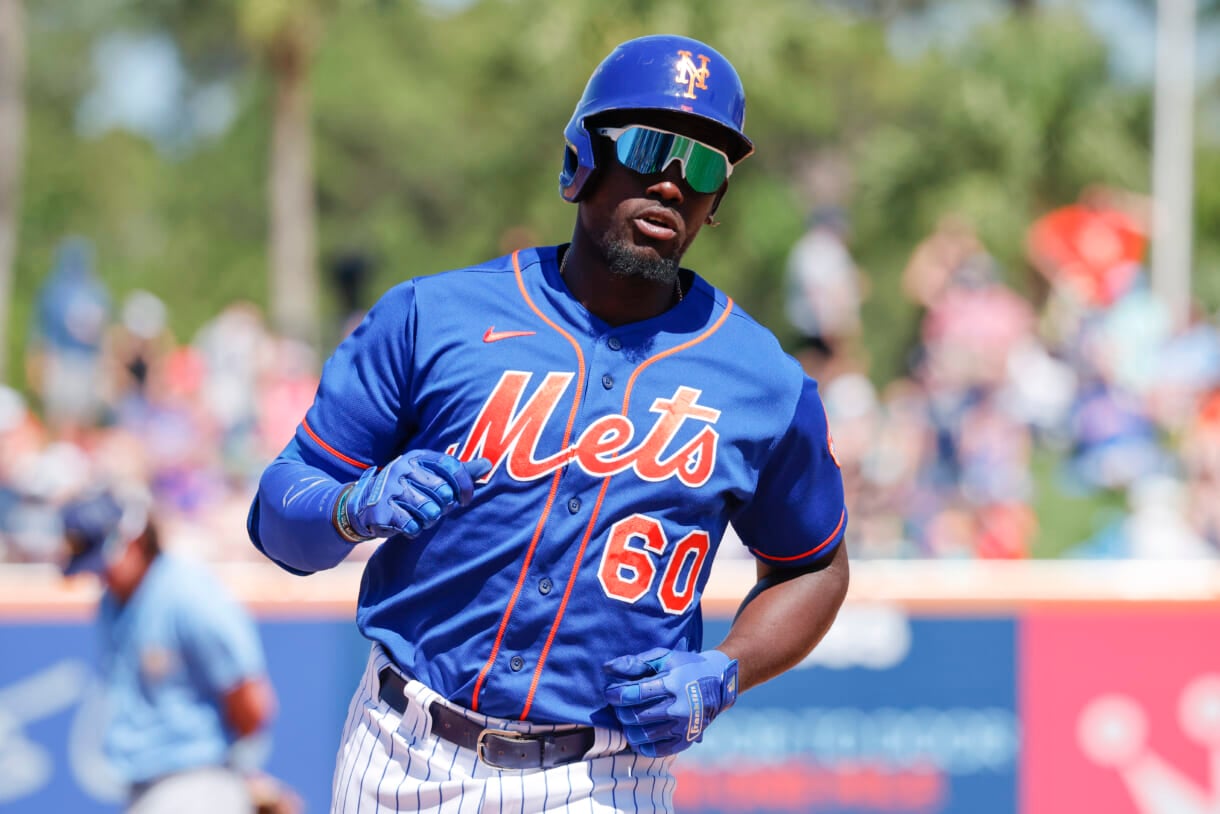
The number tells the story before the quotes ever do. One hundred twenty-six million dollars is not what teams spend to create optionality. It is what they spend to make a decision.
That is what the New York Mets did when they convinced Bo Bichette to walk away from a commitment with the Philadelphia Phillies and sign in Queens. They did it despite already having Mark Vientos and Brett Baty on the roster. They did it knowing the ripple effects would touch nearly every corner of their position-player depth chart. And they did it with clarity about where Bichette fits.
Bichette’s Position Changes Everything
The Mets have been direct about Bichette’s role. He will play third base. Francisco Lindor remains the shortstop. Marcus Semien is locked in at second. Jorge Polanco is expected to handle first base most days. That alignment alone reshapes the internal conversation.
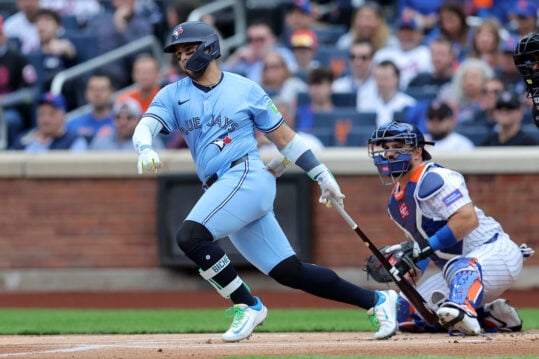
Suddenly, the Mets are not choosing between young infielders anymore. They have chosen. What remains is how aggressively they are willing to manage the fallout.
At a glance, it leaves Vientos, Baty, Ronny Mauricio, and Luisangel Acuna without a clear everyday home. That logjam becomes even more complicated if the Mets land Cody Bellinger, Luis Robert Jr., or another impact outfielder, a pursuit they have not exactly hidden.
Brett Baty Still Has a Lane
If there is one player in this group whose stock may have quietly risen, it is Baty. He posted a 111 wRC+ last season and held his own defensively across multiple positions. That combination matters on a roster that is becoming increasingly rigid in its everyday alignment.
The Mets have openly suggested they would love to keep Baty, and that makes sense. His left-handed bat, positional flexibility, and age fit a roster that is trying to win now without fully abandoning internal development. Left field is a possibility. A multi-position role is another. Either way, Baty feels like someone the Mets want to solve for, not move on from.
Vientos, Mauricio, and Acuna Face Harder Math
The picture gets murkier quickly after that. Vientos could theoretically slot in as the Mets’ designated hitter if Starling Marte does not return. That scenario keeps his bat in the lineup and preserves depth elsewhere. But if Marte comes back or the Mets add another position player, Vientos could be the odd man out and be moved in a trade, through no fault of his own.
Mauricio and Acuna sit in an even tighter squeeze. Mike Puma summed it up succinctly when he noted the Mets like Acuna for his defensive replacement and pinch-running ability, but that he will not get many opportunities to hit. That is a real concern for a 23-year-old who managed a 65 wRC+ in 193 plate appearances last season but showed flashes during Winter Ball.
Acuna’s value is clearer in short bursts. Defense. Speed. Energy. He fits beautifully as a bench piece on a contending team, even if the offensive ceiling remains theoretical.
Mauricio is the harder evaluation. His 88 wRC+ in 184 plate appearances last season does not jump off the page, but context matters. It was his first year back from multiple knee issues following surgery. Players often look different a full year removed from that kind of rehab, not six months.
The Trade Pressure Is Real
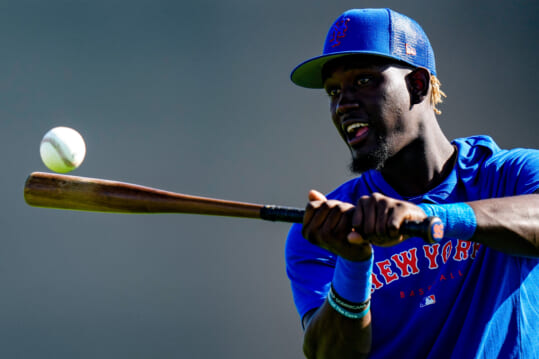
Mauricio still has a minor league option, which gives the Mets flexibility. They could stash him in Triple-A, let him play every day, and keep him ready. They could carry him on the bench. Or they could decide that his value is better realized elsewhere.
That last option may be the most realistic. The Mets need pitching. They need relief help. They could still use another starter. With so many infielders ahead of Mauricio, his breakout is unlikely to happen in Queens.
The Mets did not create this puzzle by accident. They created it because they believe elite talent at the top of the roster matters more than clean depth charts. Bichette is the bet. Everything else is the cost of doing business.
Now comes the part where the Mets prove whether they can turn that surplus into leverage, not frustration.