
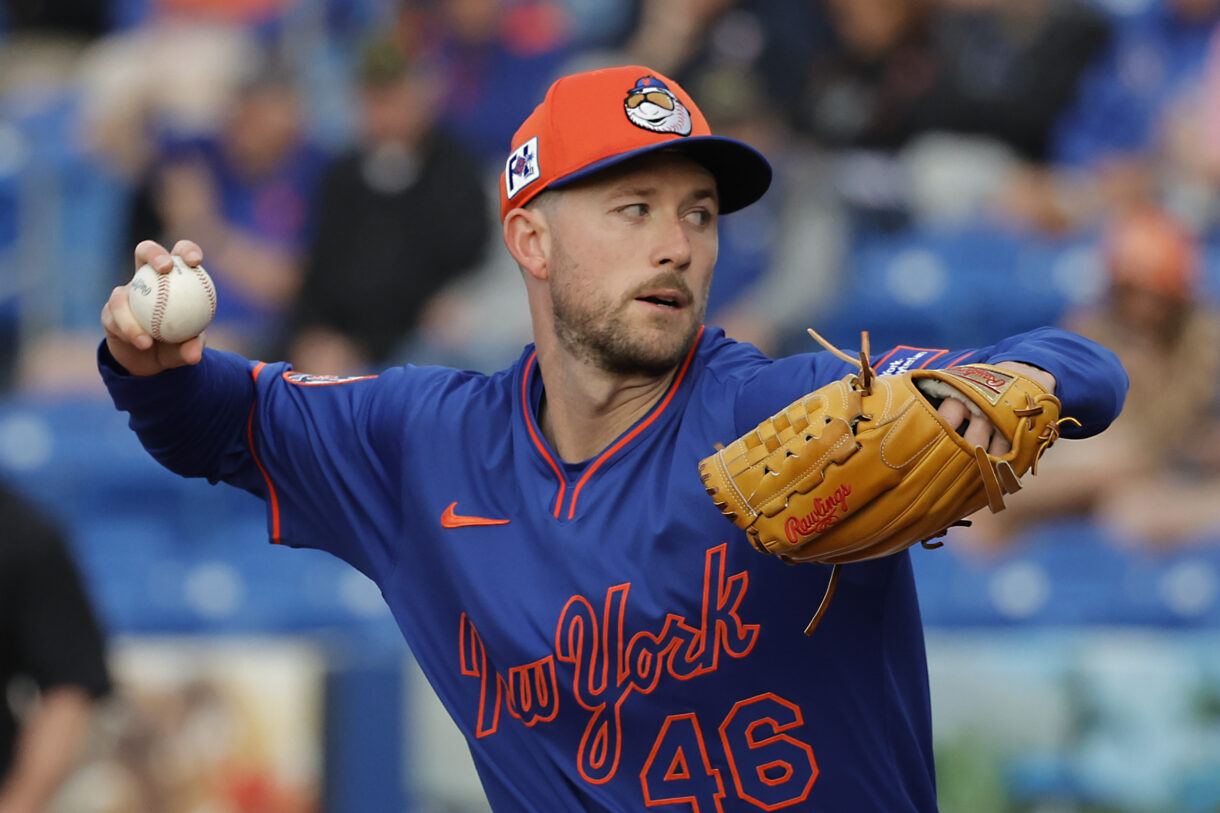
The number that jumps out isn’t the ERA. It’s the price tag. For $4.25 million, the New York Mets bought themselves a bet on process, not production, when they signed Griffin Canning before the 2025 season. What they got, before it all stopped abruptly, was one of the quieter pitching success stories of the year.
A Calculated Gamble That Paid Off
Canning arrived with baggage. A 5.19 ERA in 2024 doesn’t inspire confidence, especially in a rotation that had already tested the patience of Mets fans. But the Mets weren’t chasing the stat line. They were chasing the ingredients.
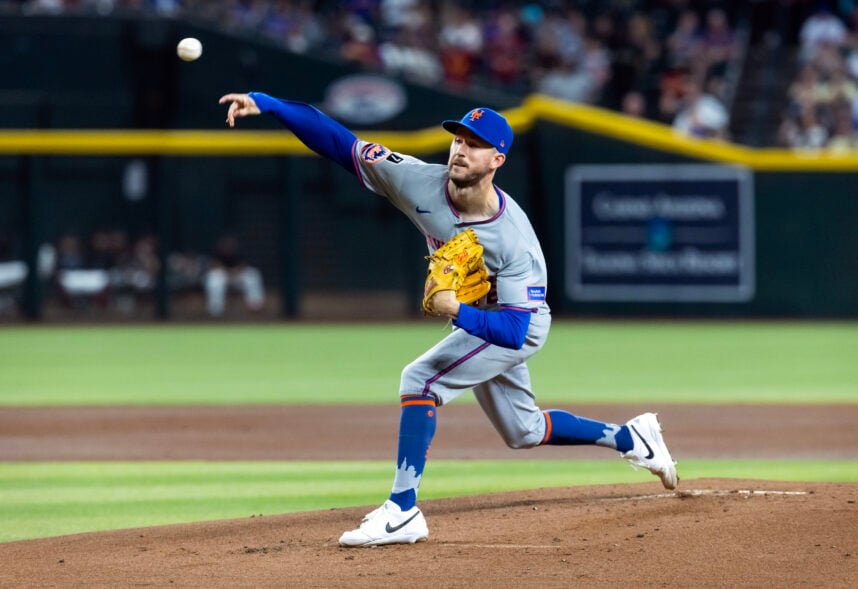
The organization pushed Canning to pitch backwards, leaning heavily on his slider and breaking pitches early in counts and saving the fastball as a finishing weapon. It wasn’t flashy, but it was intentional. Hitters chased more. Contact quality dipped. The rhythm of his outings changed.
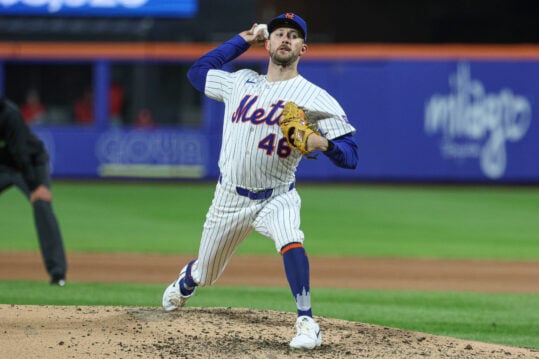
Over 76.1 innings in New York, Canning posted a 3.77 ERA across 16 starts. He looked composed. Comfortable. Like a pitcher who finally understood what he was supposed to be. That matters, especially in this market.
Then came the injury. A ruptured Achilles tendon in late June ended his season and removed a stabilizing presence from a rotation that never quite recovered its footing down the stretch.
Why the Mets Are Looking Back
The Mets now find themselves in familiar territory, searching for arms while balancing upside, risk, and cost. According to Jon Heyman, there is interest in bringing Canning back, with the expectation that he could be ready around Opening Day. Fireside Mets reported the development on X, and it makes sense on multiple levels.
Canning is not the ace this staff still needs. He is not the number two who changes the math in October. But he is something valuable. He is proof of concept.
Even though pitching coach Jeremy Hefner isn’t around anymore, the Mets showed they could take a flawed pitcher, adjust his approach, and get real results in a tough environment. That isn’t nothing. It suggests the success wasn’t accidental, and that matters when evaluating whether to re-sign a pitcher coming off a serious injury.
The Rotation Picture, With and Without Canning
If Canning returns, the Mets’ starting pitching depth would include Kodai Senga, Nolan McLean, David Peterson, Clay Holmes, Sean Manaea, Brandon Sproat, Jonah Tong, Christian Scott, and Canning himself. On paper, that’s a deep group. In reality, it’s a group filled with questions.
Senga’s health remains an ongoing concern. McLean has the talent to be special, but asking him to anchor a staff in just his second season would be unfair. Peterson and Manaea are solid but unspectacular. The younger arms are promising, not proven.
Canning fits cleanly into that picture as a reliable depth piece who already knows how to survive in New York. He wouldn’t be asked to carry the rotation. He would be asked to stabilize it.
The Real Work Still Ahead
This interest in Canning should not be mistaken for the Mets settling. The need for a frontline arm remains obvious. The stretch run exposed it.
But building a rotation isn’t only about stars. It’s about layers. It’s about having pitchers who can take the ball every fifth day without the game feeling like a coin flip.
Griffin Canning gave the Mets that before his season ended. If the Achilles heals as expected, bringing him back would be a smart, quiet move that supports the bigger one still waiting to happen.