

The inevitability of the Jeff McNeil era coming to an end in Queens has hung over the franchise for the better part of a year, and on Monday afternoon, President of Baseball Operations David Stearns finally ripped off the band-aid. The New York Mets have traded their longtime utility man to the Oakland Athletics, a destination that feels like a baseball purgatory for a 33-year-old veteran accustomed to the bright lights of New York.
While the return package has not been fully disclosed, early indications suggest the Mets acquired a pitching prospect, signaling that this move was far more about clearing the deck than maximizing immediate value.
Assessing the Cost of Doing Business
McNeil departs while entering the final guaranteed year of his four-year, $50 million contract, a deal that became increasingly difficult to justify as his role fluctuated. By moving him, the Mets shed his $12.5 million salary for the 2026 season, freeing up significant financial flexibility to chase younger, more dynamic talent.
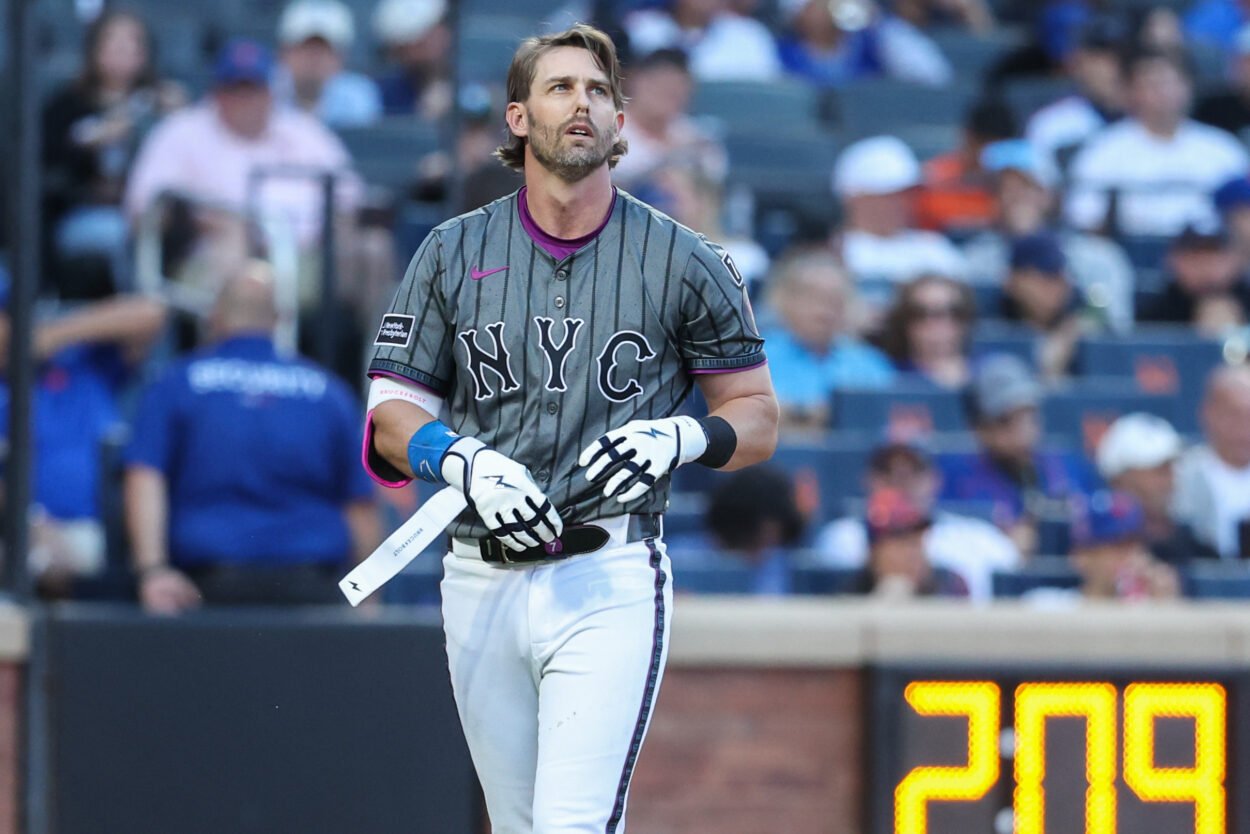
While his tenure ended with whispers of decline, McNeil was still a productive big leaguer in 2025, posting a .243/.335/.411 slash line over 122 games. He finished with a 111 wRC+, meaning he was still 11% better than the league-average hitter, proving that his unique, slap-hitting style still has a place in the modern game.
The algorithm hides the best New York Mets news; make sure you pin Empire Sports Media on Google News so you don’t miss a beat.
The Metrics Paint a Complicated Picture
The decision to move on from McNeil stems largely from underlying metrics that suggest his physical tools are eroding faster than his counting stats might indicate. While his bat-to-ball skills remained elite—ranking in the 94th percentile for strikeout rate and the 89th percentile for whiff rate—the quality of that contact has plummeted.
He ranked in the 12th percentile for average exit velocity and the 13th percentile for hard-hit rate, essentially relying on placement and luck rather than authority to get on base. This lack of impact makes his offensive profile fragile, and the Mets seem unwilling to bet on a bounce-back at this stage of his career.
A Massive Hole in the Defensive Alignment
Trading McNeil creates an immediate headache for manager Carlos Mendoza, who now loses the most versatile chess piece on his roster. McNeil’s ability to competently play second base, third base, and all three outfield spots gave the Mets a safety net that allowed them to weather injuries throughout the season.
Defensively, he was actually quite solid in 2025, ranking in the 76th percentile for range (Outs Above Average), proving he could still cover ground even as his sprint speed dipped to the 26th percentile. Finding a single player to replicate that multi-positional reliability will be a significant challenge for the front office.
Paving the Way for the Next Generation
Ultimately, this trade is a declaration that the Mets are prioritizing athleticism and upside over comfort and nostalgia. Stearns is betting that he can aggregate McNeil’s production through a combination of younger prospects and cheaper utility options who offer more power potential. It is a calculated risk to remove a clubhouse staple who has been part of the team’s fabric since 2018, but it is the kind of unsentimental efficiency that winning organizations thrive on.