

The first thing people noticed on Monday night wasn’t the dollar figure. It was the intent. The New York Mets didn’t wait around, didn’t slow-play the market, didn’t overthink the risk. They targeted Devin Williams, a pitcher who looked more human than usual in 2025, and handed him a three-year pact worth north of $50 million. That kind of move tells you exactly how the Mets plan to reshape their bullpen: aggressively, financially, and with a level of conviction that hadn’t always surfaced in recent winters.
A Calculated Bet on an Elite Track Record
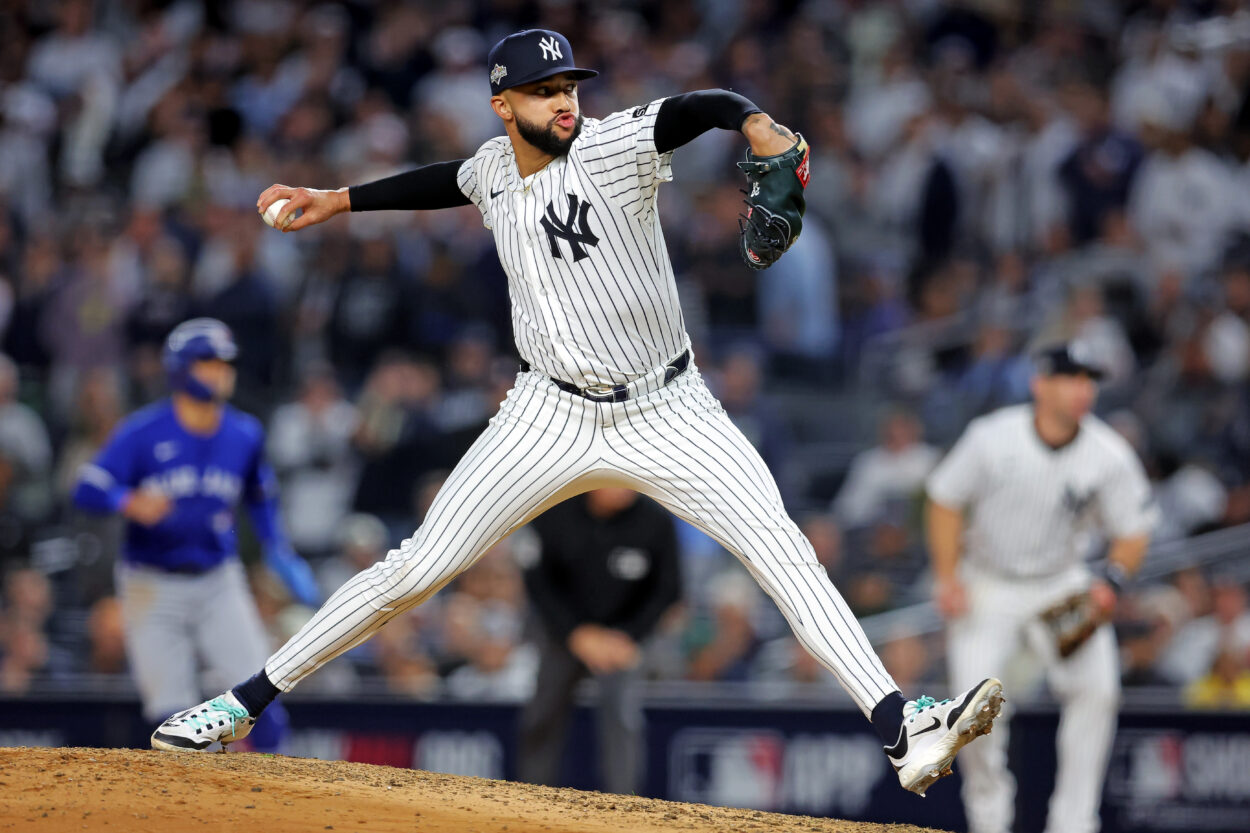
Williams arrives with a 4.79 ERA from his season in the Bronx attached like an asterisk, but a career 2.45 ERA and a 38.4 percent strikeout rate erase a lot of doubt. You don’t accidentally dominate hitters for five straight seasons. You don’t luck your way into being the guy executives openly refer to as “hallway-quiet, mound-electric.” Sometimes pitchers simply have bad years. Sometimes they’re asked to do too much. Sometimes a little mechanical drift snowballs into a statistical mess. The Mets are betting heavily on the idea that 2025 was the outlier rather than the rule.
There’s also the matter of structure. No opt-outs. No options. Just three seasons, $45 million in salary, $5 million deferred, and a $6 million signing bonus. For all the talk about flexibility, this is a commitment. The Mets didn’t sign Devin Williams to “see how it goes.” They signed him because they expect him to stabilize the late innings from day one.
Why the Diaz Question Isn’t Settled
What’s interesting is how many fans assumed this signing shut the door on an Edwin Diaz reunion. The logic made sense on paper. You rarely see a front office commit more than $50 million to a reliever and then chase another who will likely command $20 million per year for four or five seasons. But David Stearns and Steven Cohen don’t operate under the standard blueprint, and the Mets haven’t shown much interest in half-measures this winter.
Andy Martino’s reporting only amplified that point. According to him, the Mets are still pursuing Diaz. Not monitoring. Not circling back later. Still in. That alone shifts the conversation, because there isn’t a bullpen in baseball that wouldn’t rethink its entire offensive approach if Williams and Diaz were waiting in the eighth and ninth.
The Case for Reuniting with Edwin Diaz
Diaz, for his part, overcame a sluggish first few weeks last season to finish with a 1.63 ERA and 98 strikeouts. The velocity ticked back up. The slider regained its shape. The confidence returned. Anyone who watched him from June on saw a pitcher who looked almost exactly like the 2022 version, the one who turned Citi Field into a two-inning celebration every time the trumpets blared.
The Mets know how much that mattered. Beyond the highlights and the memes, Diaz anchored the rhythm of the roster. Late leads stopped feeling fragile. Games took on a defined shape. That’s not small stuff, especially for a team trying to stabilize a clubhouse that’s seen its share of turnover.

What a Williams–Diaz Duo Would Mean
If Stearns finds a way to pair Williams with Diaz, the Mets could own the most overpowering late-game duo in the league. Two closers by pedigree. Two strikeout machines. Two pitchers who force hitters to choose between chasing a disappearing changeup or guessing on a slider they can’t read in time. Not many teams can shorten games to seven innings. The Mets might be building exactly that.
There’s still work ahead, and the Mets will need more than a supercharged bullpen to contend deep into October. But moves like this carry weight. They define intention. They tell players, rivals, and fans that New York isn’t waiting for 2027 to matter.
And if they add Edwin Diaz to the mix, the rest of the National League will feel it fast.