
The ZiPS projections system, popularized by FanGraphs’ Dan Szymborski, projects the New York Mets to finish the 2026 campaign with an 89-73 record, the second-best in the NL East and third-best in the senior circuit, behind the Los Angeles Dodgers and the Philadelphia Phillies. Meanwhile, Ronny Mauricio faces a make-or-break year.
ZiPS has Mets as the third-best team in the National League
For the first time in a long while, the pessimism surrounding the Mets is being challenged by something concrete: projections. Szymborski’s ZiPS system pegs the Mets as an 89-win team in 2026, a meaningful jump from last season and good enough to rank among the NL’s elite. While the Phillies are still projected ahead in the NL East, age and fragility at the top of their rotation suggest the gap is far from insurmountable. The numbers paint a picture of a team that’s closer to contention than chaos as spring training approaches.
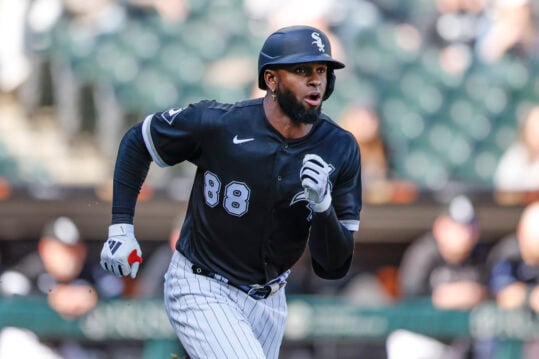
That optimism survives despite major departures. Pete Alonso, Brandon Nimmo, Jeff McNeil, and Edwin Díaz are gone, but David Stearns responded by reshaping the roster rather than tearing it down. The offense now leans into balance and right-handed power, highlighted by Bo Bichette, Luis Robert Jr., Marcus Semien, and Jorge Polanco.
On the mound, the addition of Freddy Peralta gives Kodai Senga a true co-ace, while young arms like Nolan McLean and Jonah Tong provide upside. With a stabilized bullpen and improved depth, the Mets look built to withstand the inevitable rough patches. October is no longer wishful thinking—it’s the baseline expectation.
Why 2026 is a make or break year for Mets’ Ronny Mauricio
Mauricio enters 2026 at a crossroads. Once viewed as a cornerstone-in-waiting, his post-injury return in 2025 raised as many questions as it answered. While flashes of power were evident, his overall production lagged behind league average, largely due to alarming strikeout and chase rates. The raw tools are undeniable—elite bat speed and loud exit velocities—but his inability to control the strike zone, especially from the right side of the plate, has capped his effectiveness.
Defensively, Mauricio showed surprising competence at third base, offering some positional flexibility. However, the Mets’ revamped infield has dramatically narrowed his path to playing time. With Lindor, Bichette, Semien, and Polanco locked into everyday roles, Mauricio may be squeezed into a bench role, Triple-A assignment, or even trade discussions. Projections see him as a fringe contributor unless tangible improvements arrive quickly. Spring training will likely determine whether he’s part of the Mets’ future core—or nearing the end of his tenure in Queens.
The Mets had an entirely different plan for Bo Bichette before landing him on $126 million deal
Bichette’s move to third base wasn’t the Mets’ original plan—it was the result of an offseason pivot. According to reporting, the team initially envisioned Bichette as their second baseman before circumstances forced a reshuffle. After acquiring Marcus Semien to handle second and missing out on Kyle Tucker, the Mets circled back to Bichette, this time as the answer at third base to inject much-needed offense into the lineup.
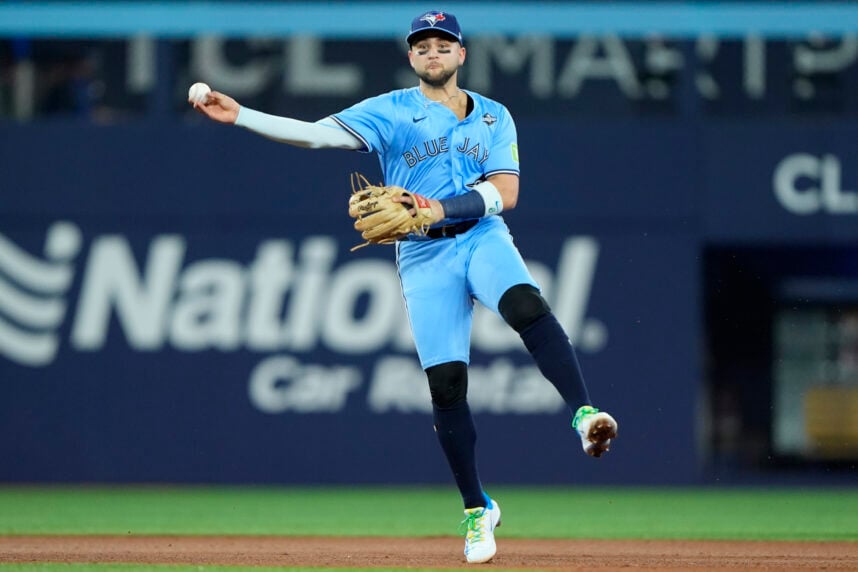
The defensive fit remains a question, as Bichette’s arm and unfamiliarity with the position could lead to early growing pains. Still, the alternative options were far less inspiring. Rather than settling for glove-first stopgaps or unproven youth, David Stearns prioritized impact offense, betting that runs scored would outweigh any defensive shortcomings. It’s a calculated risk, but one that reflects a clear philosophy: star power beats mediocrity, even if the transition isn’t seamless from day one.