
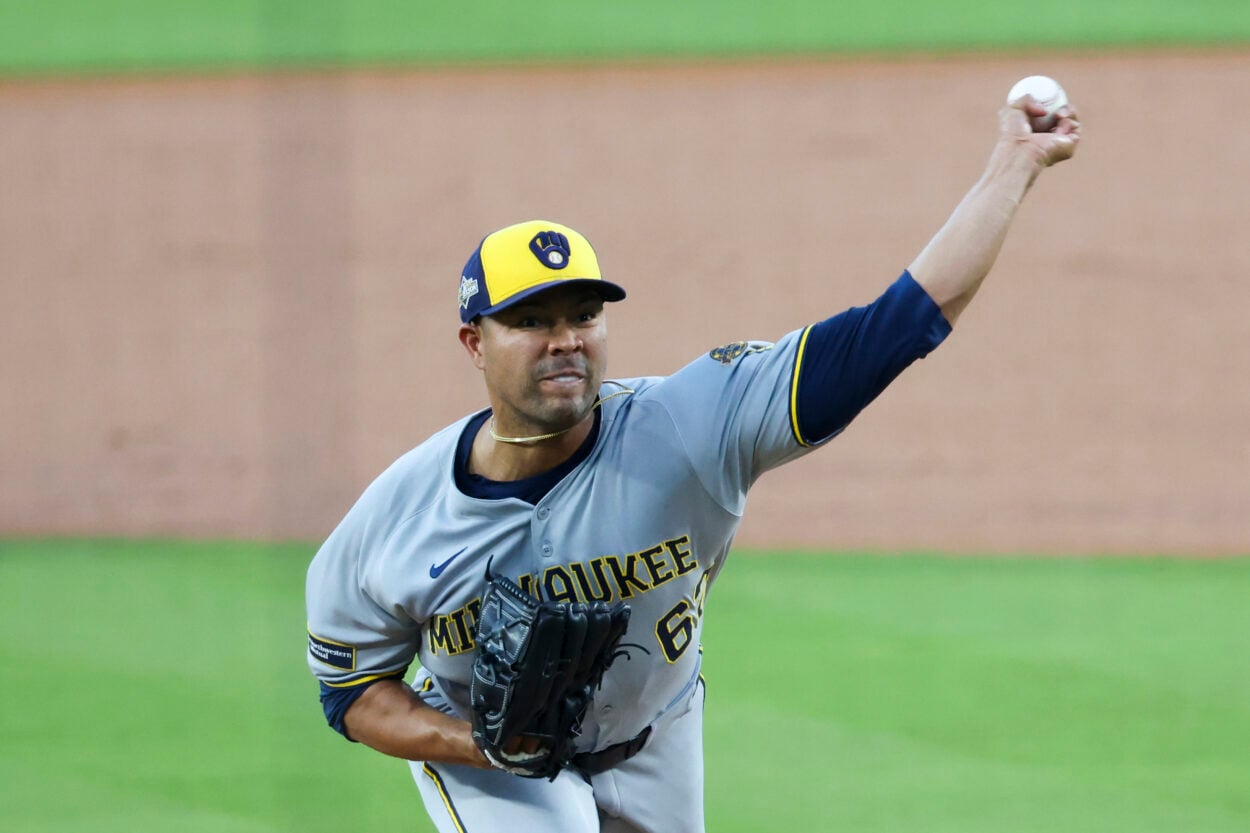
Jose Quintana, who pitched for the New York Mets in 2023 and 2024, is reportedly generating interest from the organization again as extra pitching depth. Speaking of the rotation, the Mets have an exciting new duo at the top with Freddy Peralta and Nolan McLean.
The Mets could turn to a familiar face in Jose Quintana for rotation insurance
Landing Freddy Peralta gave the Mets the ace they’ve been chasing for years, but the front office knows a rotation can’t survive on star power alone. That’s why rumors of a potential reunion with Quintana make a lot of practical sense, even if they lack flash. The Mets need reliability behind their top arms—someone who can absorb innings, protect the bullpen, and stabilize the staff when injuries inevitably hit.
On the surface, Quintana’s 2025 numbers look serviceable. A 3.96 ERA across 131.2 innings shows he can still navigate lineups and take regular turns, which is valuable for a back-end starter. Dig deeper, though, and the warning signs are loud. His 5.20 xERA suggests he benefited heavily from good fortune, and expecting that luck to repeat itself is risky, especially in a more demanding environment.
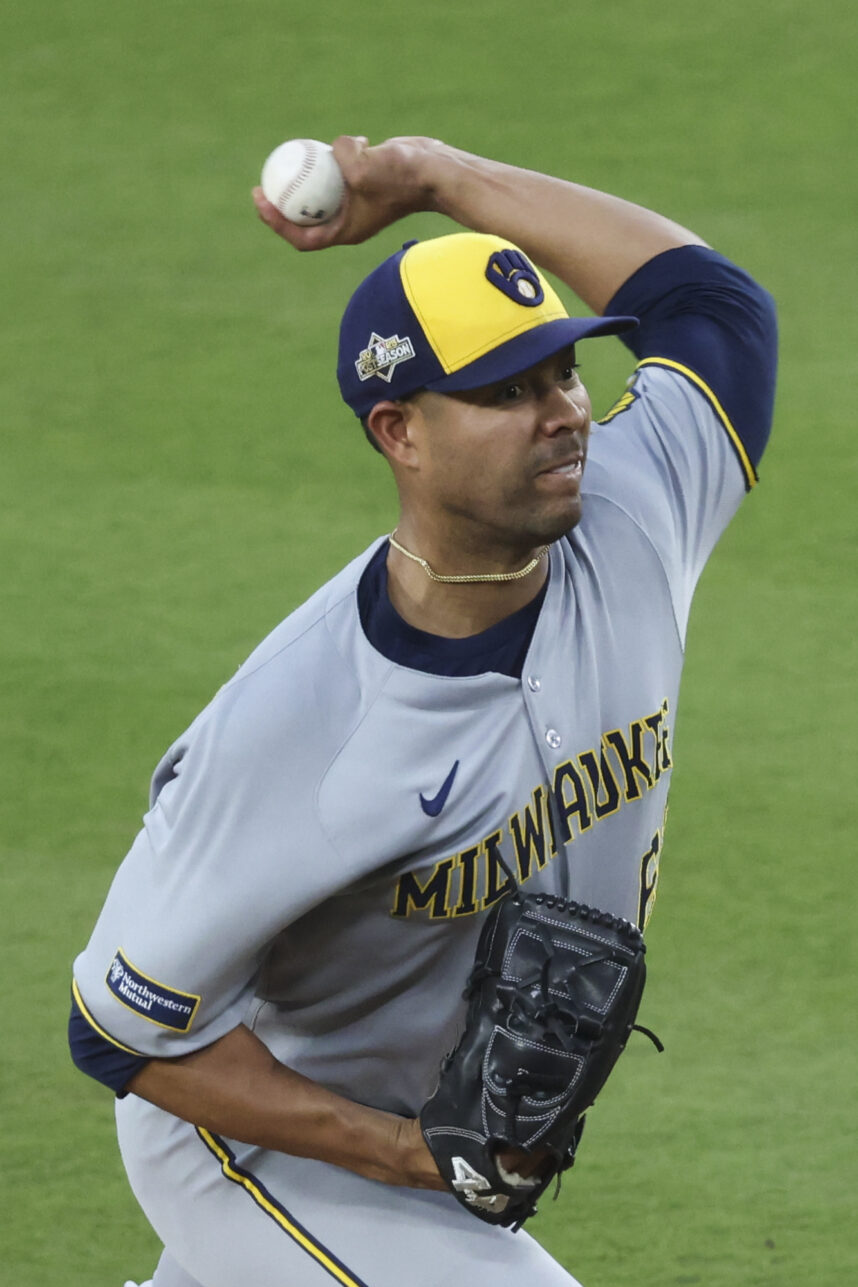
The real concern is declining stuff. Quintana’s fastball velocity and strikeout rates sit near the bottom of the league, forcing him to rely almost entirely on command and a still-effective curveball. For the Mets, this wouldn’t be about upside—it would be about survival. With questions surrounding long-term workloads for pitchers like Kodai Senga and Nolan McLean, Quintana represents a familiar, if fragile, safety net.
The Mets have a new dynamic starting rotation duo after acquisition of Freddy Peralta
The Mets’ acquisition of Peralta didn’t just fill a hole—it reshaped the entire identity of their rotation. Peralta arrives as a true strikeout ace, coming off a dominant 2025 season in which he paired elite run prevention with overpowering swing-and-miss stuff. He gives the Mets something they’ve lacked: a starter who can control games on his own and set the tone for a series.
Peralta’s arsenal is built to frustrate hitters. His four-seam fastball plays well above its velocity thanks to movement and deception, while his slider was one of the most devastating pitches in baseball last season. Together, they allowed him to rack up strikeouts and limit damage, making him one of the most valuable pitchers in the league by advanced metrics.
What makes the rotation truly intriguing, though, is how Peralta complements Nolan McLean. While Peralta dominates through whiffs and fly balls, McLean thrives by pounding the lower half of the zone and generating grounders at an elite rate. McLean’s early MLB success showed he has legitimate put-away stuff, highlighted by a devastating curveball. The contrast in styles gives opposing lineups no rest—and gives the Mets a pairing that could anchor the staff for years.
4 Mets make MLB Pipeline’s Top 100 Prospects list
The Peralta trade cost the Mets real prospect capital, but it also highlighted just how deep and resilient their farm system has become. Despite moving notable names, the organization still boasts multiple Top 100 prospects, led by McLean, who now sits as the top-ranked pitching prospect in baseball. His rapid rise from experiment to frontline arm has validated the Mets’ player development overhaul.
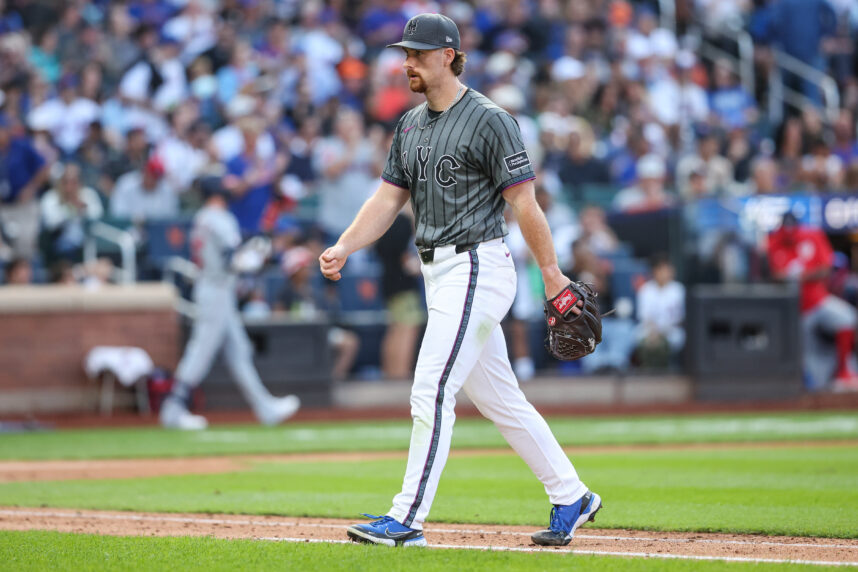
Position-player talent remains just as impressive. Carson Benge has emerged as a potential cornerstone, blending power, speed, and plate discipline while racing through the minors. He looks close to MLB-ready and could factor into the big-league lineup sooner than expected. Meanwhile, Jonah Tong represents the classic high-upside arm whose surface stats don’t tell the whole story, masking dominant strikeout ability and frontline potential.
Even deeper down the list, players like A.J. Ewing showcase the system’s breadth, combining elite speed with legitimate offensive production. The key takeaway is that the Mets no longer operate with a fragile pipeline. They can trade from strength, absorb losses, and still project sustained success. The Peralta deal was about winning now—but the system behind it ensures the window stays open far longer than one season.