
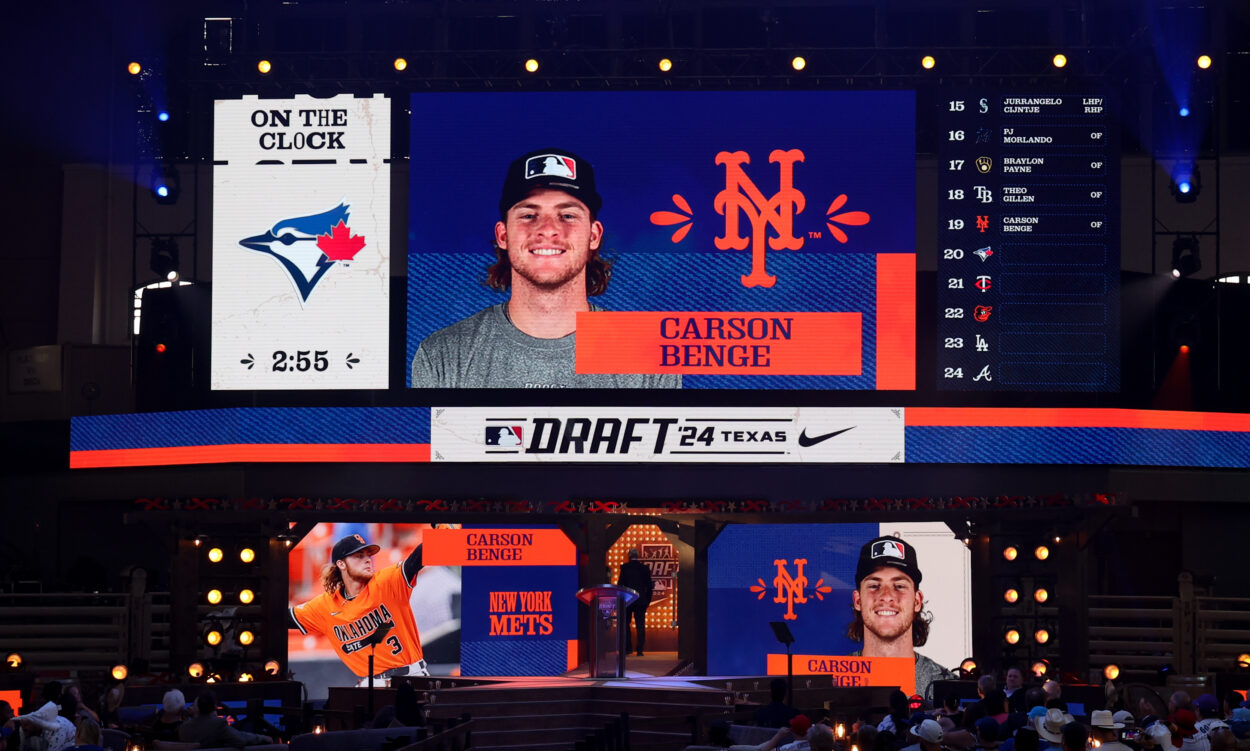
The New York Mets traded for Luis Robert Jr. to play center field, but left field is still a question mark. It will likely come down to a spring competition between Tyrone Taylor, Brett Baty, and prospect Carson Benge. The latter is taking matters very seriously and is already in Port St. Lucie working on his game. Let’s discuss Friday’s news, including the Mets’ exciting rookie, a deep dive into Bo Bichette’s offensive profile, and executives calling the Freddy Peralta trade a ‘win-win’ one for New York and Milwaukee.
Mets’ Carson Benge is already gearing up to steal a job
The Robert trade grabbed the headlines, but its ripple effects may end up shaping the Mets’ spring just as much. With center field locked down, left field remains wide open, and Benge is wasting no time trying to claim it. Already in Port St. Lucie and working ahead of schedule, Benge is signaling that he isn’t content to wait his turn—he wants a real shot at the Opening Day roster.
A brief and ugly Triple-A stint late last season shouldn’t cloud the bigger picture. Over just 24 games in Syracuse, Benge struggled badly, but that sample pales in comparison to the dominance he showed in Double-A. There, he was one of the most dangerous hitters in the Eastern League, pairing elite contact skills with patience, power, and a mature approach that overwhelmed opposing pitchers.
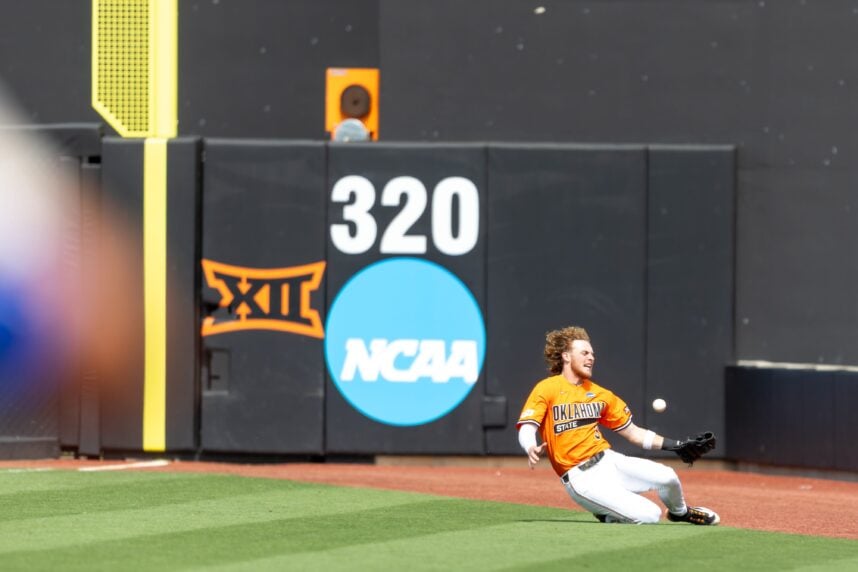
What makes Benge especially intriguing is how cleanly he fits into the Mets’ revamped lineup. As a left-handed hitter with zone control, speed, and a strong throwing arm, he complements a roster heavy on right-handed thump. Veteran Tyrone Taylor offers reliability, but Benge brings upside, dynamism, and the chance to raise the ceiling. If he performs this spring, the Mets may find that their quietest storyline becomes one of their most impactful.
New York Mets: A deep dive into the amazing offensive profile of Bo Bichette
Bo Bichette’s defensive shortcomings are real, but they also miss the point. The Mets didn’t commit serious money to him because of his glove—they did it because his bat represents something increasingly rare in today’s game: a hitter who thrives on elite contact rather than raw power and strikeout tolerance. His 2025 season was a masterclass in offensive consistency, blending old-school batting averages with modern underlying metrics.
Bichette’s surface numbers were excellent, but the deeper data paints an even stronger picture. He ranked among the league’s best in expected batting average, strikeout avoidance, and quality of contact, showing an uncommon ability to square up pitches across the zone. His aggressive approach doesn’t lead to empty swings; instead, it results in a steady stream of line drives and hard-hit balls that keep innings alive.
The defensive concerns soften considerably with his move to third base, where range is less critical and reactions matter more. That shift allows the Mets to extract maximum value from his offensive profile while minimizing risk in the field. Whether Bichette opts out after one year or stays longer, the logic is the same: the Mets added a hitter who stabilizes the lineup and makes prolonged offensive slumps far less likely.
MLB executives consider Mets-Brewers trade a ‘win-win’ transaction
By trading Brandon Sproat and Jett Williams for Freddy Peralta and Tobias Myers, the Mets made a clear statement: the future is important, but the present matters more. The cost was steep, involving two highly regarded young players, but that was the price of acquiring a legitimate top-of-the-rotation arm without hesitation or half-measures.
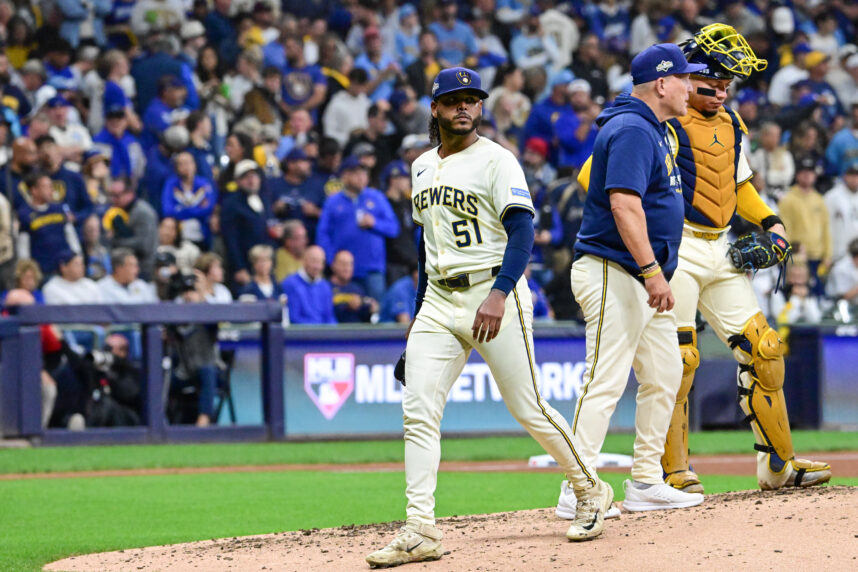
Peralta gives the Mets exactly what they lacked—a proven, high-end starter capable of dominating lineups and anchoring a playoff rotation. Coming off a strikeout-heavy, low-ERA season, he brings immediate credibility and stability. Myers, meanwhile, adds quiet but valuable depth, offering versatility that could ease pressure on both the rotation and bullpen over a long season.
Industry reaction suggests this was a true exchange of needs. Milwaukee maximized value by turning short-term control into long-term assets, while the Mets secured impact pitching now. For New York, this deal wasn’t about patience or projection—it was about legitimacy. With Peralta in place, the rotation finally feels complete, and the Stearns era officially looks ready to contend.