
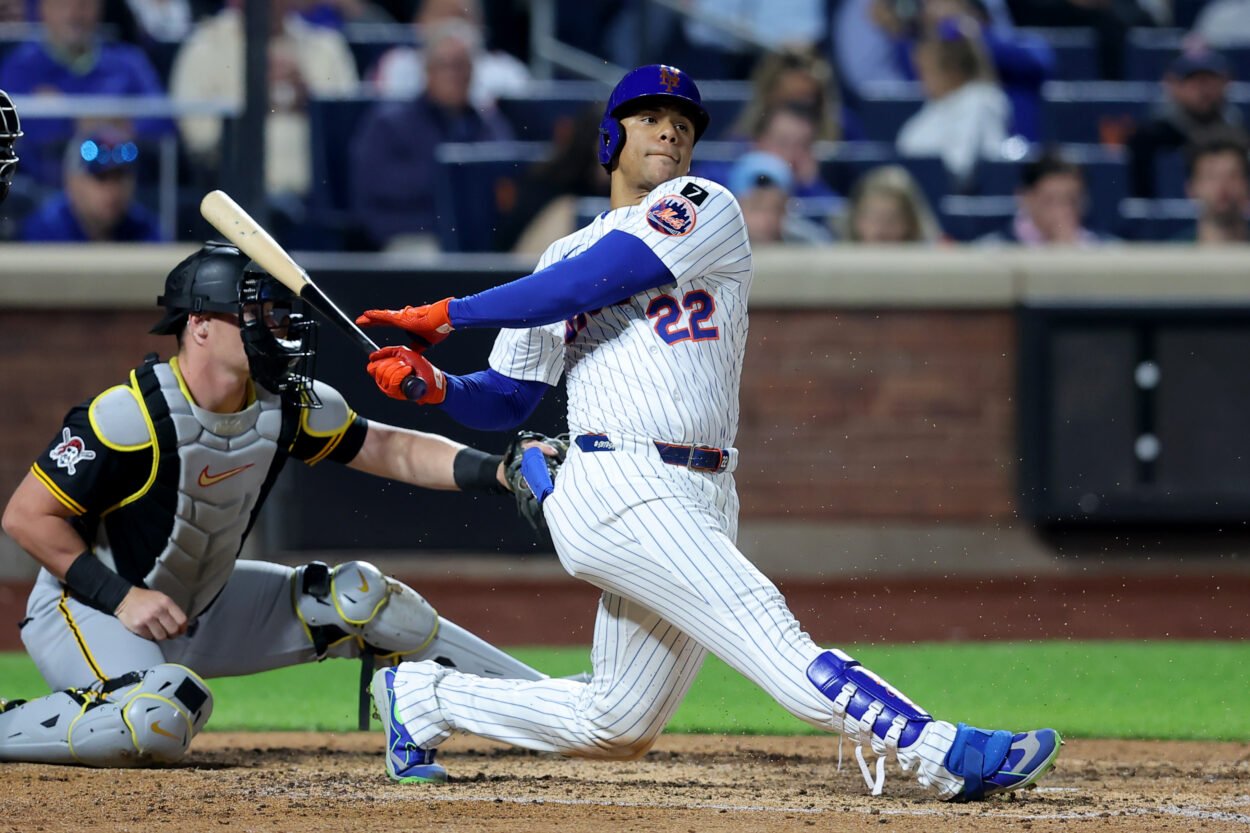
Predictions are supposed to make people uncomfortable. They are guesses dressed up as confidence, and in baseball they usually come with a long list of reasons they might fall apart by May. Still, when MLB.com’s Anthony Castrovince floated Juan Soto as a future National League MVP, it landed differently in Queens. Less like wishful thinking. More like a reminder of what the New York Mets actually have.
Why the MVP Conversation Starts With Soto
The Mets were not a clean operation last season. Anyone who watched the summer knows that. But Soto’s season cut clean through the noise. He became just the third player ever, and the first since the turn of the century, to post a 40-homer, 100-RBI, 100-walk, 100-run, 30-steal line. That is not a hot streak or a narrative-driven award case. That is a statistical profile that puts you in the room before the debate even starts.
Castrovince acknowledged the warts. Soto could have run harder at times. His defense still pulls down his overall value. None of that changes the central truth. At 27, Soto is at the peak of what he does best. He controls the strike zone like a veteran and punishes mistakes like a middle-of-the-order monster. Those skills age well, and they play anywhere.
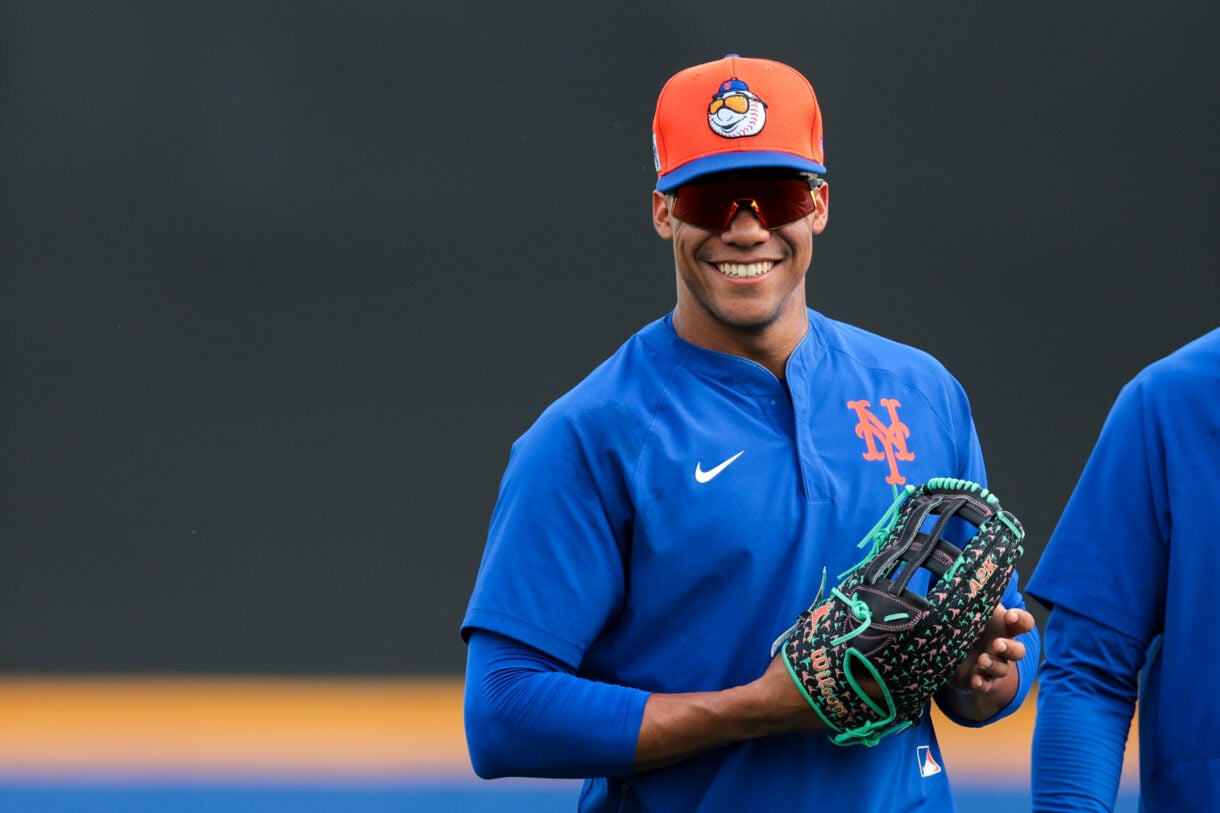
Adjusting to Queens and Taking Over
The first few weeks of Soto’s Mets tenure felt like a slow burn. Big contract. New city. New expectations. It took a little time for everything to sync up, which is not unusual when the price tag reads $765 million. Once it clicked, the season changed shape.
Soto finished 2025 with a 156 wRC+, nearly identical to his career mark of 158. That matters. It tells you the year was not smoke and mirrors. He hit a career-high 43 home runs, scored 120 times, swiped 38 bases, and spent the entire season hovering around the edge of a 40-40 chase. The Mets lineup looked different when he was locked in. Pitchers worked differently. Games slowed down when he stepped in.
Defense, Leadership, and the Reality Check
No one is confusing Soto for Francisco Lindor in the leadership department. Lindor sets the tone vocally and defensively. Soto leads by standing in the box and daring pitchers to make a mistake. His glove will never be his calling card, and it will always give MVP voters something to nitpick.
But the offensive floor is so high that it almost becomes a separate argument. Even when Soto is not at his best, he reaches base. Even when the swing feels quiet, the walks pile up. Over a full season, that reliability stacks value in ways that are easy to overlook until you add it all up.
The Ohtani Problem and the Mets Angle
As long as Shohei Ohtani is healthy and active, every NL MVP conversation starts with an asterisk. That is reality. Still, awards are not handed out on reputation alone. There will be a season where timing, context, and performance line up.
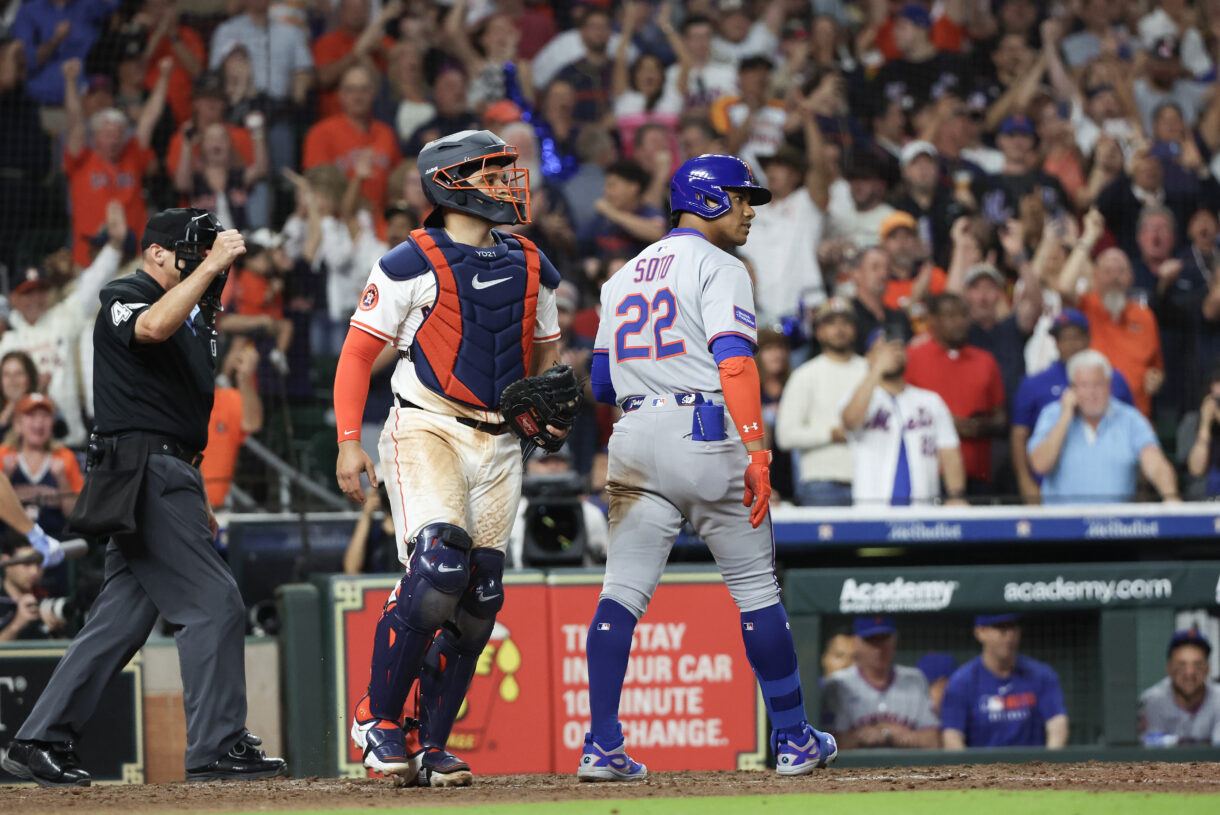
For the Mets, 2026 feels like one of those windows. Soto will still be in his prime. If the team takes a step forward and Soto posts another season anywhere near his 2025 line, the argument writes itself.
Soto does not need to change who he is to win an MVP. He just needs the season to meet him where he already lives. If that happens, the New York Mets will not be surprised, and neither should anyone else.