
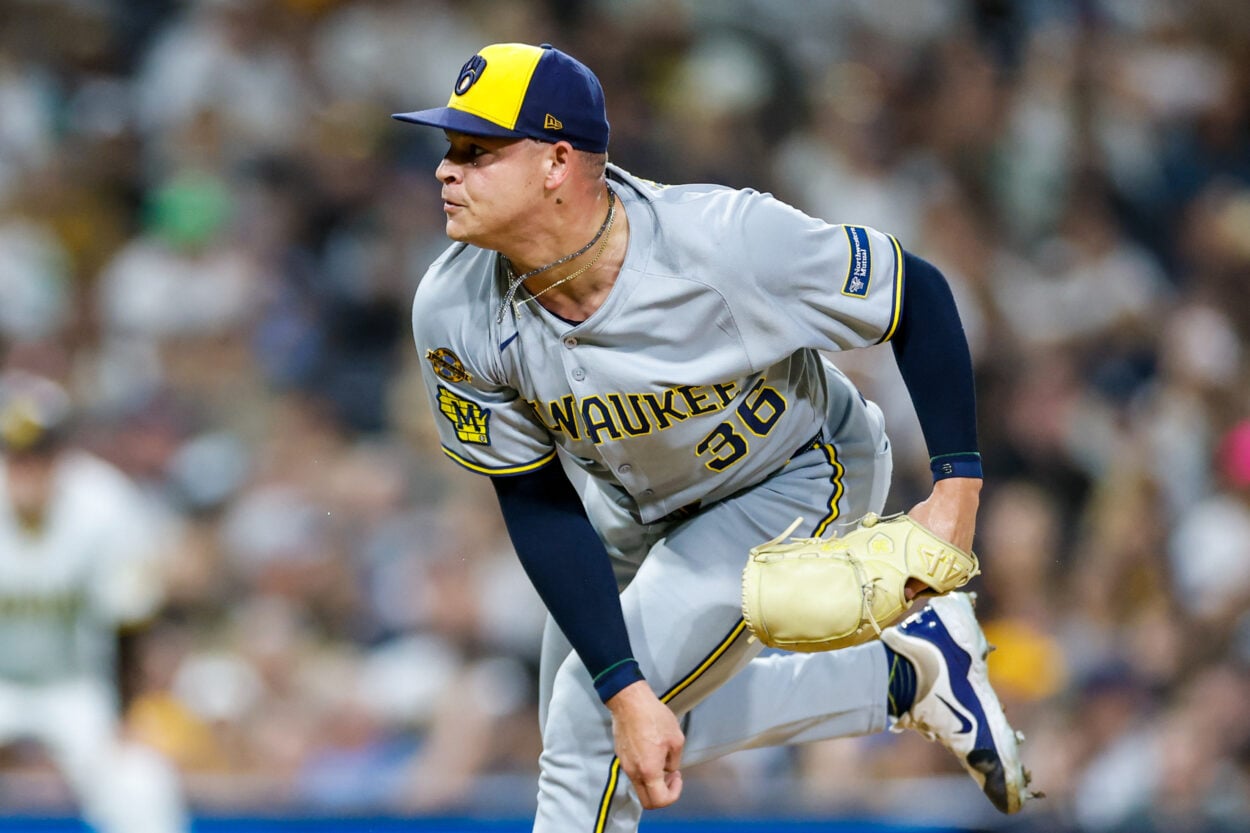
David Stearns is done playing around. If you had any doubts about his plan for 2026, Wednesday night’s blockbuster just cleared the air like a 98-mph heater. The Mets didn’t just go out and grab a rotation arm; they went to Milwaukee and snatched the crown jewel of the trade market in Freddy Peralta. It cost them the farm, or at least two of the biggest barns in Jett Williams and Brandon Sproat, but the message is loud. The Mets are officially in the “win right now” business.
The Ace Queens Has Been Begging For
Let’s be real about the price tag first. Giving up Sproat and Williams for one year of Peralta is a massive gamble, the kind of move that either wins you a ring or gets a GM fired in three years. Jett Williams is a spark plug with an .827 OPS in the minors, and Sproat was looking like a legitimate homegrown mid-rotation piece. But flags fly forever, and potential doesn’t strike out the side in October.
Peralta is the genuine article. He’s coming off a 2025 campaign where he went 17-6 with a 2.70 ERA and sat right there in the top five of the Cy Young voting. We’re talking about a guy who just mowed down 204 batters and led the NL in wins. He joins a rotation that suddenly looks terrifying with Nolan McLean coming off a 2.06 ERA debut and veteran staples like Sean Manaea, Kodai Senga, and Clay Holmes. This isn’t just a “good” staff anymore. It’s a group that can actually look the Dodgers in the eye without blinking.
The Hidden Value of Tobias Myers
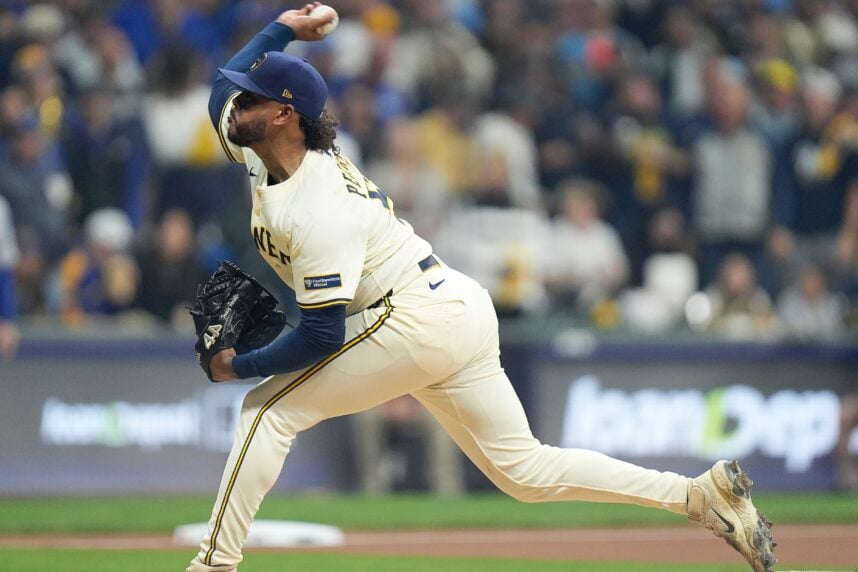
While everyone is busy ordering their Peralta jerseys, smart baseball people are looking at the other name in the deal. Tobias Myers is far from a throw-in. He is the ultimate David Stearns special—a versatile, cost-controlled arm that gives manager Carlos Mendoza a tactical Swiss Army knife. Myers might not have the elite 28 percent strikeout rate that Peralta brings, but he is a strike-throwing machine who simply does not beat himself.
Last season, Myers stabilized a 3.55 ERA over 50.2 innings, mostly coming out of the bullpen but showing he could handle the stress of starting when things got thin. He’s only 27 and has five years of team control left. That is exactly the kind of depth the Mets lacked during their late-season collapse last year. Whether he’s eating three innings in a blowout or making a spot start in August, Myers ensures the bullpen doesn’t catch fire every time a starter has a bad night.
His 20.9 percent strikeout rate as a major leaguer is far from elite, but this is a guy who limits walks (6.5 percent walk rate) and home runs (1.10 per nine innings), and those are traits that will help him in New York.
Myers throws four different pitches: a four-seamer, a cutter, a slider, and a splitter. He also uncorks a changeup and a curveball on occasion.
Myers tunnels his four main offerings very well, too. His four-seamer averages 93.5 mph, but his splitter is his best pitch with a 39.4 percent whiff rate and a .149 xwOBA.
A Rotation Built for the Long Haul
The beauty of adding a guy like Myers is the flexibility it creates for the rest of the staff. With Senga still a bit of a wildcard and Peterson providing left-handed balance, the Mets finally have a “good problem” to solve. They have more quality arms than they have rotation spots. In a 162-game marathon, that isn’t a luxury; it’s a necessity.
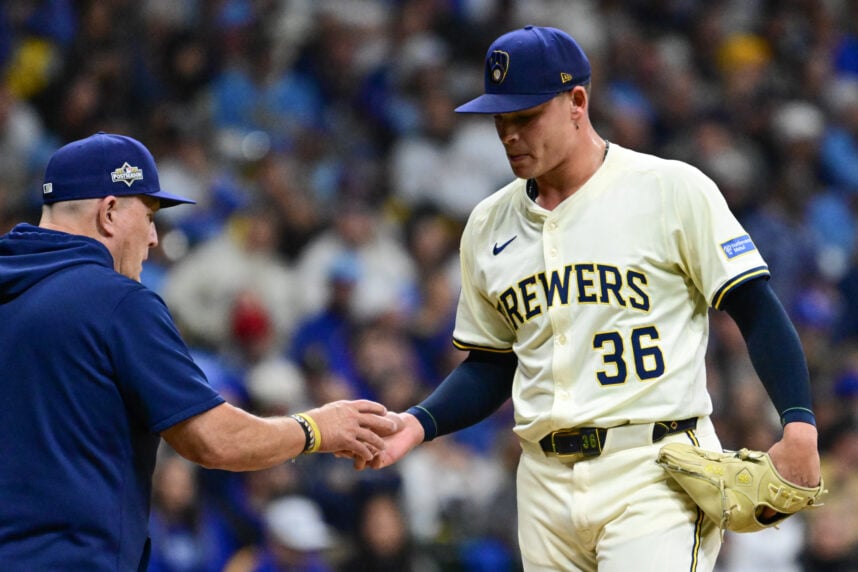
Stearns knows this roster better than anyone, and his familiarity with the Brewers’ system allowed him to cherry-pick the exact pieces he needed to bridge the gap between being a contender and being a favorite. Peralta provides the ceiling, but Myers provides the floor. For a fan base that has spent way too long waiting for the “next big thing” in the prospects rankings, this trade is a refreshing dose of reality. The window is open, and the Mets just threw a brick through it.