

The winter has felt quiet at Citi Field, the kind of quiet that makes fans squint at the calendar and wonder when the real offseason is supposed to start. The New York Mets have watched familiar faces walk out the door, and for a franchise that once sold stability as its strength, the losses have piled up fast.
Brandon Nimmo is gone. Edwin Diaz is gone. Pete Alonso, Jeff McNeil, and other pillars of the last era are gone, too. For a fan base trained to measure ambition in bold strokes, it has been easy to call this offseason disappointing. That reaction is understandable.
It is also incomplete.
Because if the Mets land Kyle Tucker, everything changes in a hurry.
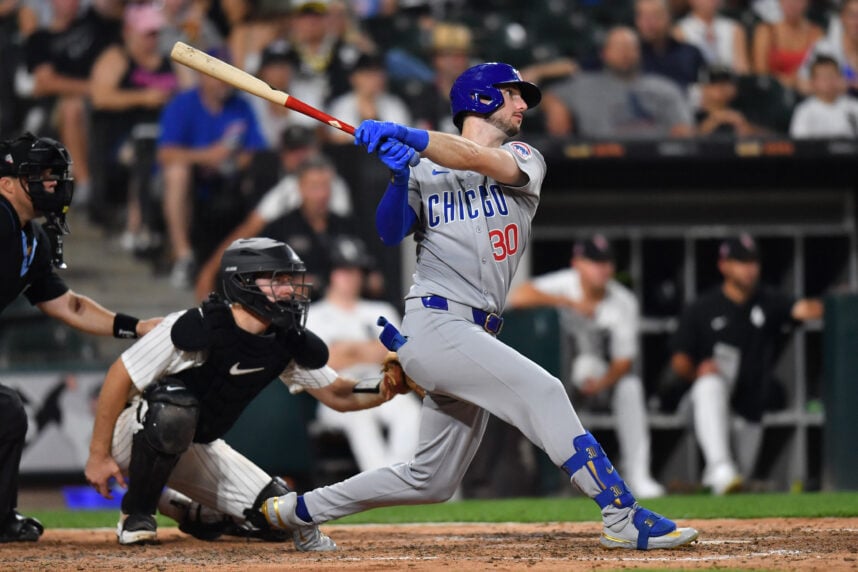
A Different Kind of Swing
Tucker is not just another name on the market. He is the best position player available, a left-handed star entering his prime who impacts games in every direction. The usual heavyweights know it. The Los Angeles Dodgers and Toronto Blue Jays, last seen trading punches deep into October, are both circling with long-term offers that stretch seven, eight, maybe nine years.
The Mets are approaching this from a different angle.
Instead of matching years, they are flexing cash.
On Tuesday, reports surfaced that the Mets had an offer on the table worth roughly $50 million per season over three years. That alone turned heads. Then MLB insider Jim Duquette added another layer, reporting that the proposal has likely grown to four years at the same staggering average annual value, with multiple opt-outs built in.
That detail matters. A lot. We are now talking about a four-year, $200 million commitment.
This is not a reckless bid. It is a calculated one, tailored to a very specific type of player and a very specific type of owner.
Why This Fits the Mets Right Now
Steven Cohen getting directly involved is the tell. When the Mets want something badly enough, the numbers start to bend. A four-year deal at $50 million per season is not about patience. It is about leverage.
Neither the Dodgers nor the Blue Jays are anywhere near that annual figure. Their strength is security. Tucker could sign today and know exactly where he will be playing into his mid-to-late 30s, likely at around $40 million per year. That is generational money and generational peace of mind.
The Mets are offering something else entirely. Maximum earnings now, with control later.
Tucker just hit 22 home runs, stole 25 bases, and posted a 136 wRC+ in 2025 with the Chicago Cubs. He is not chasing upside. He is living it. Four years in Queens at $50 million per season puts him back on the market at 32. That is not ideal, but it is also not ancient. With opt-outs, it gives Tucker power in every direction.
From the Mets’ perspective, this is how you buy impact without chaining your future to a single contract.

What Tucker Would Change on the Field
The Mets’ outfield right now feels unfinished, like a sentence waiting for its verb. Juan Soto is the centerpiece. Beyond that, it gets thin quickly. Tucker would not just fill a spot. He would reshape the entire lineup.
He lengthens the order. He balances Soto. He makes opposing managers manage differently from the first inning on. The Mets did not lose stars this winter to tread water. They lost them because they were pivoting.
Adding Tucker would turn that pivot into a statement.
The Choice in Front of Him
This will come down to preference, not persuasion. Tucker can take the long road and lock in comfort. Or he can take the Mets’ offer and bet on himself one more time, backed by an owner willing to write checks that most teams will not even consider.
For the New York Mets, that willingness alone has reopened a door that felt closed just weeks ago.
And if Tucker walks through it, this offseason will be remembered very differently.