
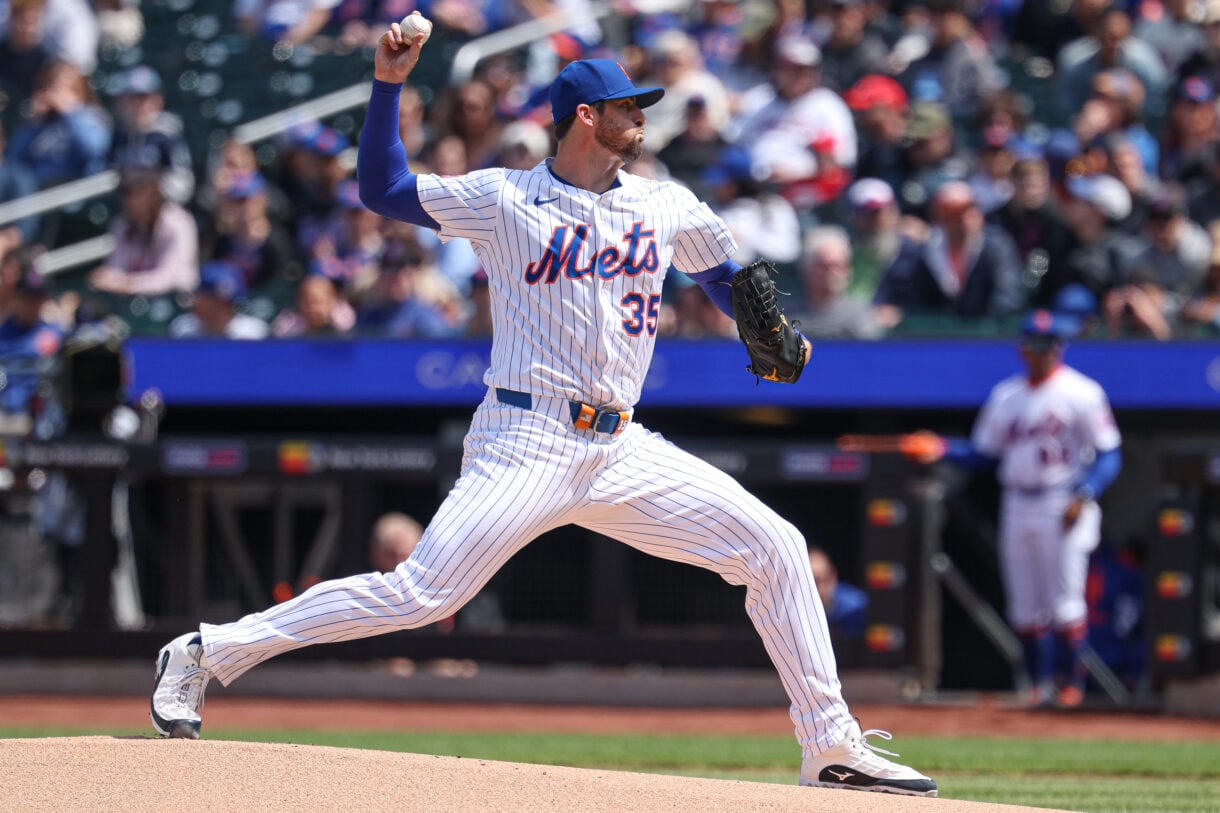
The Mets took a $38 million gamble on turning a volatile closer into a rotation workhorse, and after one full season, the results are… complicated.
Clay Holmes didn’t just survive his first year as a starter; he thrived in sheer volume, logging a staggering 165.2 innings and posting a 12-8 record that stabilized a rotation desperate for durability. But if you look closer at the numbers, the cracks in the foundation are visible, and unless Holmes takes a massive step forward in 2026, the Mets might find themselves paying for a sinker-baller who lives dangerously on the edge of implosion.
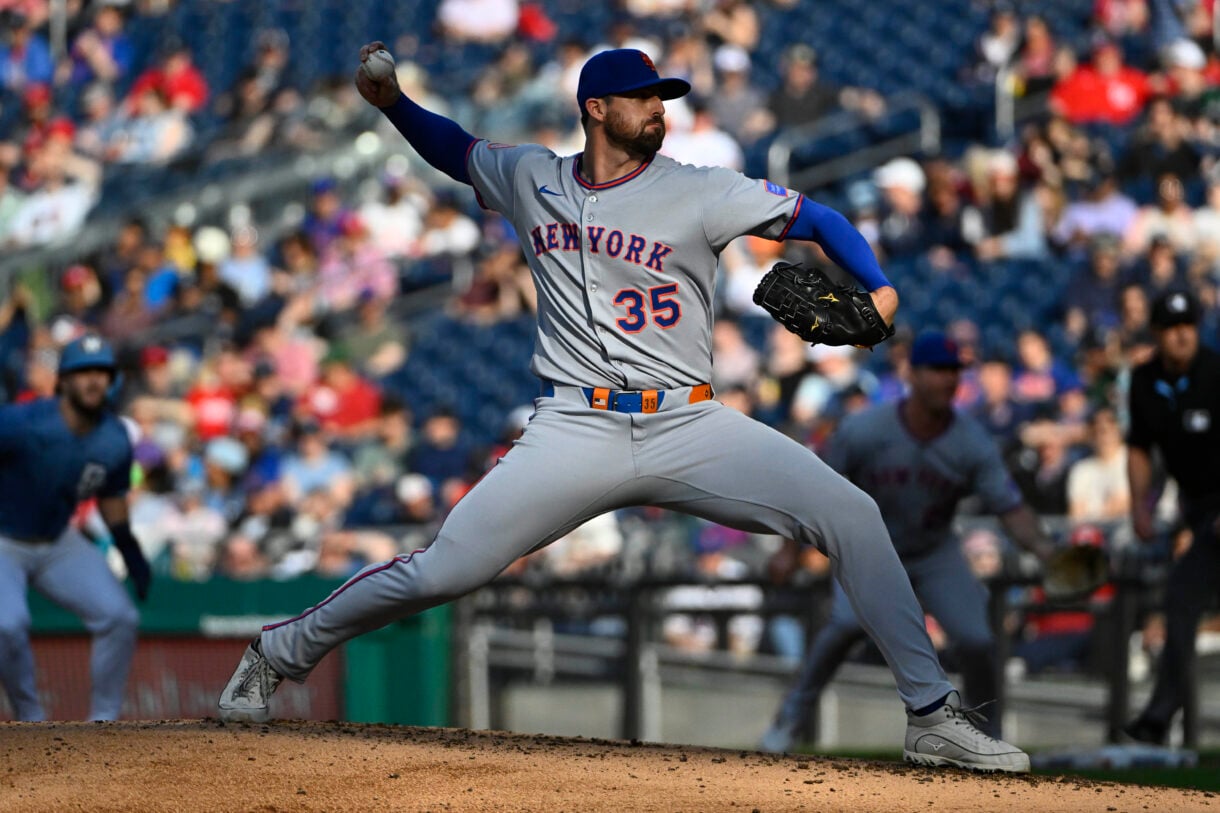
The “Clay Holmes Starter Project” was defined by a drastic philosophical shift: trading dominance for efficiency. In his reliever days, Holmes was a strikeout artist, posting a 9.71 K/9 in 2024 with the Yankees; as a Mets starter in 2025, that number plummeted to 7.01 K/9. This was a necessary evil to preserve his arm for 31 starts, but it means he can no longer blow 98 mph fastballs past hitters to erase mistakes. He is now a contact manager living in a high-wire act, relying on a defense that has to be perfect behind him.
The algorithm hides the best Mets news; make sure you pin Empire Sports Media on Google News so you don’t miss a beat.
The Sinker Is Elite, But the Breaker Is Broken
The good news is that Holmes’ primary weapon remains one of the best pitches in baseball. His sinker run value ranked in the 93rd percentile last season, and his ground ball rate sat in the 94th percentile (55.9%), proving he can still suppress damage and keep the ball in the yard.
When he is right, he is a bowling ball of a pitcher, inducing weak contact and quick outs that allow him to pitch deep into games despite a fastball velocity that has dipped to the 39th percentile (93.7 mph average).
However, you cannot survive as a mid-rotation starter in 2026 with just one pitch, and this is where the concern lies. Holmes’ breaking run value was abysmal, ranking in the 10th percentile, meaning his slider and sweeper—pitches that used to be wipeout offerings—were getting hammered. He used his sweeper nearly 25% of the time against righties, but without the “bite” to finish them off, it became a liability rather than a weapon.
Looking Ahead: Developing a Put-Away Pitch
For Holmes to justify the remaining years of his deal and that 2027 player option, he has to rediscover a swing-and-miss pitch. He proved he has the stamina to be a starter; now he needs the arsenal of one. If he can refine that sweeper or lean more into the changeup that showed promise against lefties, he transforms from a “contact manager” into a legitimate No. 3 starter. If not, hitters will eventually stop swinging at the sinker and start sitting on the hanger.