

In Juan Soto’s first year in Queens, he had a masterclass of a season in terms of individual excellence, despite the Mets organizational failure. The $765 million man posted a .396 on-base percentage (OBP) and a 156 wRC+ in 2025, metrics that quietly got him 3rd place in the MVP voting. However, the Mets missed the playoffs, largely because opposing pitchers realized they could pitch around him. With a weak lineup behind him, outside of Alonso, Soto walked nearly 130 times, many of those instances due to necessity, rather than his incredible plate discipline.
David Stearns and the front office have made it a plan this offseason to protect Soto by making $166 million worth of moves to place Bo Bichette and Luis Robert Jr in this lineup. The theory is that pitchers will now be forced to throw strikes for Soto, which will lead to damage, and eventually more runs scored for the Mets. In order for this execution to work, it relies on two injury-prone players staying on the field.
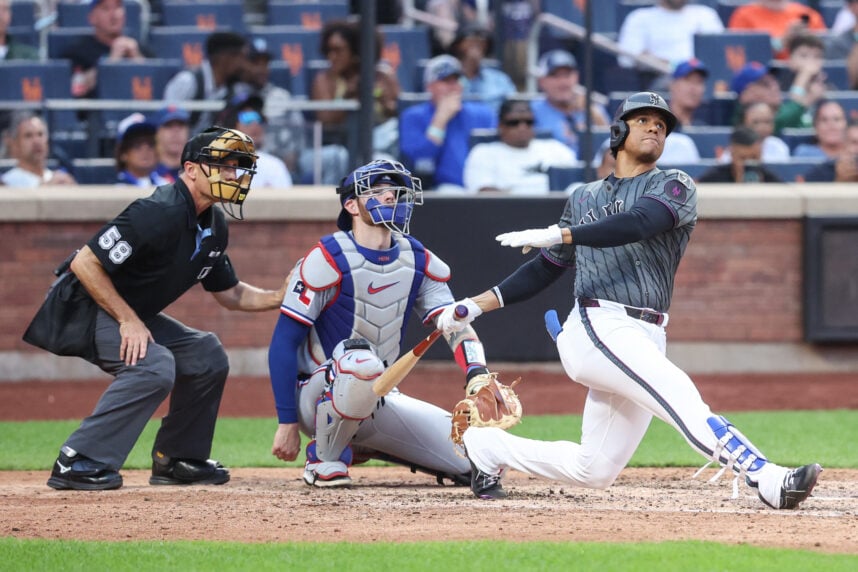
Bo Bichette and the Price of Contact
Bo Bichette’s three-year, $126 million deal might be a steep price, but it pays for his elite bat-to-ball skills in the cleanup spot, the one thing that the 2025 Mets lacked. Bichette rebounded in 2025 with a .311 average and an .840 OPS, posting 3.8 WAR while cutting his strikeout rate from 19% in 2024 down to 14.5% this past season. He offers a noticeable 1-2 punch for pitchers who try to work around Soto in the lineup.
Last season, Soto saw a career-low percentage of fastballs in the zone, because the lineup behind him did not statistically threaten opposing pitchers. If Bichette can continue his 2025 contact rates, it will force pitchers to challenge Soto early in the count, or potentially risk putting two runners on base to attempt to face the middle of the order.
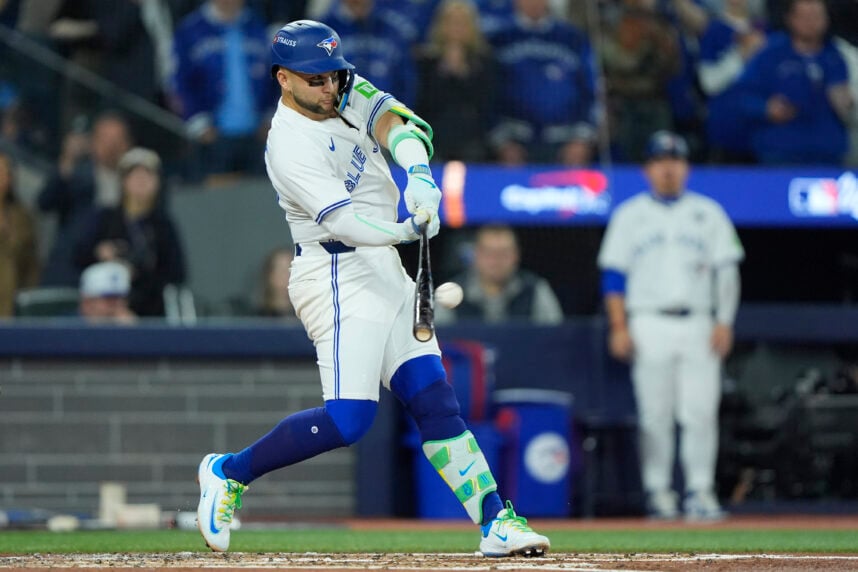
Luis Robert Jr: A Distressed Asset with Upside
The plan for the trade of Luis Robert Jr. will be to ignore his 2025 floor, and to aim to bring back his 2023 ceiling. Acquired for pennies on the dollar (IF Luisangel Acuña and RHP Truman Pauley), Robert is coming off a disastrous 2025 where he posted an 84 wRC+ and 1.3 WAR over 110 games. Between the 2025 trade deadline and this offseason, the market treated him as a distressed asset, and the Mets were able to get a steal, taking in his $20 million salary and betting on a rebound from the 28-year-old center fielder.
If Robert is able to get back to his 2023 form, a season where he hit 38 home runs with an .857 OPS, this lineup can become one of the deepest in the National League. Last season, Robert’s underlying metrics were concerning, posting a whiff rate that jumped up to 31.7%, but his raw power was still elite, posting a bat speed in the 92nd percentile. Even if he is able to return to being a league-average hitter (100 wRC+), it would still make him a massive upgrade over Tyrone Taylor, who patrolled center field last year.
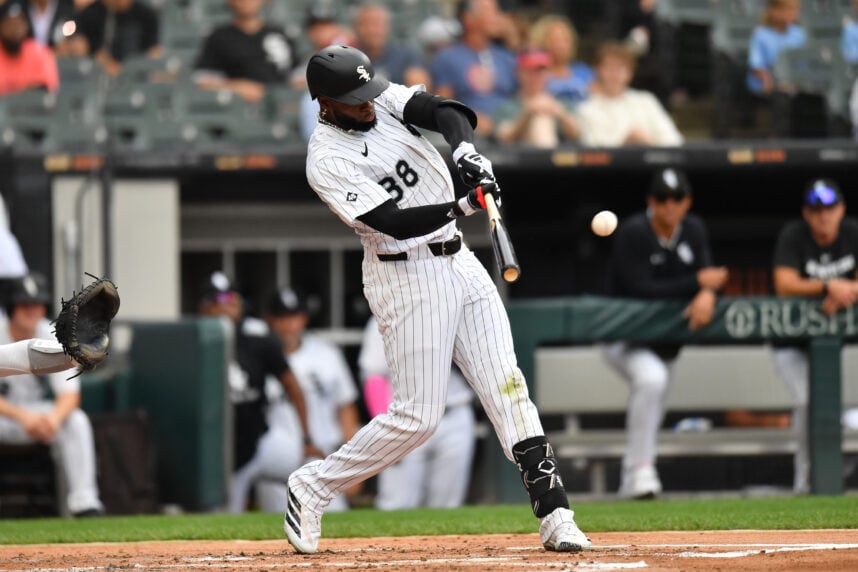
2026 Projections and the Soto Factor
Historical similarity scores for Soto’s age 27 season suggest that a statistical correction is inevitable. FanGraphs projects for Soto to have a 6.1 WAR season in 2026, built largely on an increase in his Runs Scored and RBI totals. With Bichette’s ability to clear the bases, and Robert’s ability to extend the lineup, we could see Soto’s .525 slugging percentage from 2025 tick upward as he should be able to see more hittable pitches this year.
The Mets are not asking Soto to be better than he was in 2025. What the Mets do need is for Soto’s environment at the plate to be less hostile, in order to see him produce. Soto’s projected 165 wRC+ will be wasted if it only ends up resulting in a solo walk. The Mets’ additions of Bichette and Robert should ensure that when Soto gets on base, he should not be staying there.
The Bottom Line
If Bichette is able to hit .300, Juan Soto could easily end up securing the National League MVP. Moreover, if Luis Robert Jr can manage to stay healthy, the Mets have a real chance to win the division.
However, the floor is equally as low. If neither gamble pays off, the franchise could end up facing another $350 million payroll wasted on another .500 season. The checkbook is open, but the margin for error remains razor-thin.