
The market always tells you when it is ready to move. This winter, it waited on hitters. Now, it is staring straight at starting pitching.
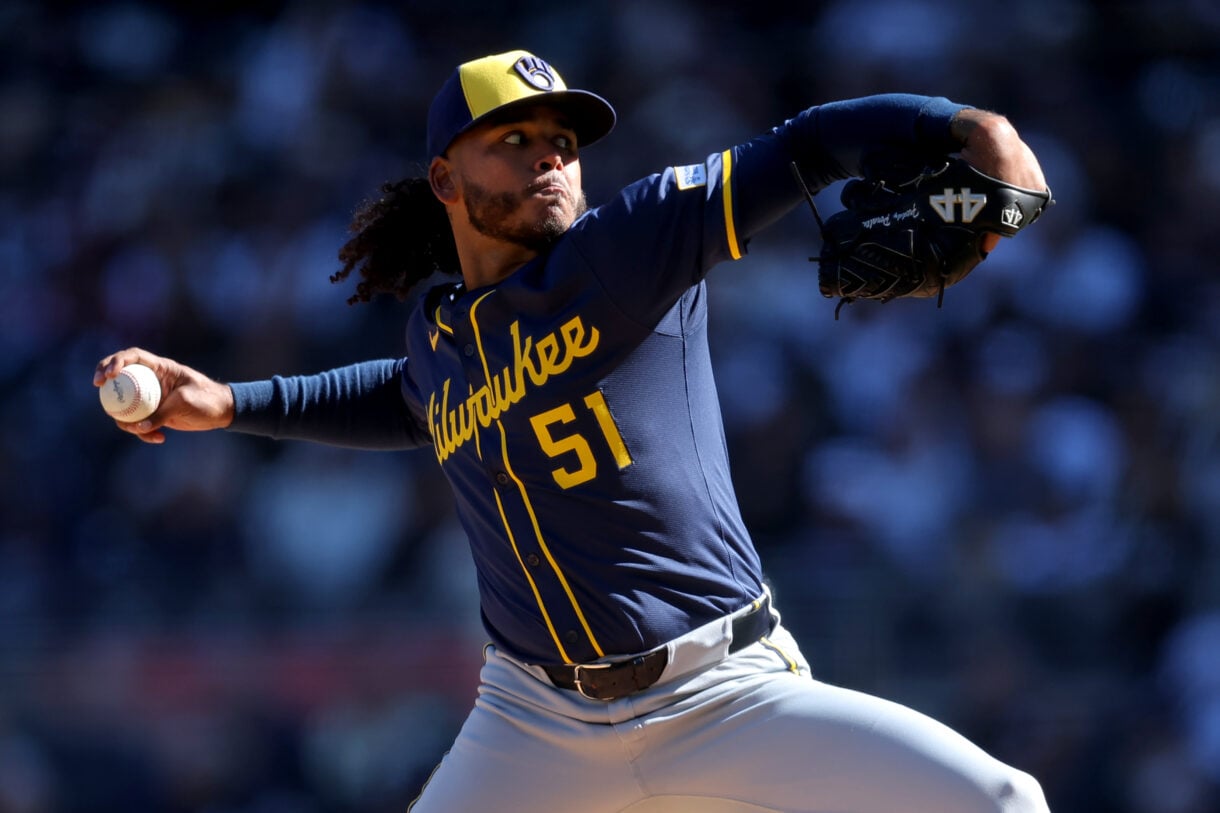
The Milwaukee Brewers know it too. That is why Freddy Peralta remains the most fascinating name still floating around the offseason, a pitcher who checks every box contenders chase and fits budgets that would rather not swallow another nine-figure deal. At 29, Peralta is in his prime, coming off a dominant season, and scheduled to make just $8 million in 2026. For a frontline starter, that is almost absurd.
Why Peralta Sits at the Center of the Market
Peralta is not theoretical upside. He is production. A 2.70 ERA and 204 strikeouts speak for themselves, but the real appeal is how he gets there. He misses bats consistently, works deep enough into games, and has proven he can handle the pressure of anchoring a rotation. The Brewers have built their pitching identity around arms like this for years, and Peralta has been the latest standard-bearer.
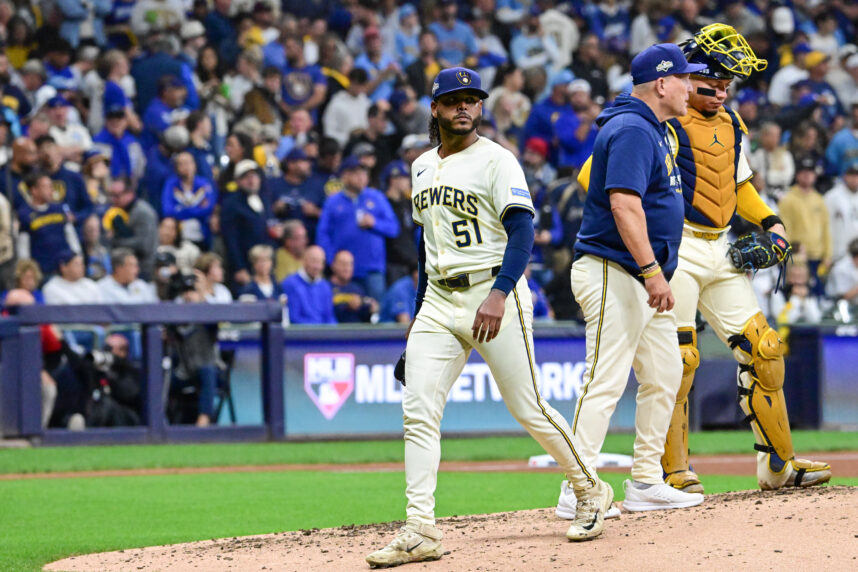
Now, he is also a trade chip. A big one.
With Ranger Suárez off the board and free agents like Framber Valdez and Zac Gallen still lingering, teams are recalibrating. Spending $200 million or more on a pitcher in his 30s does not appeal to everyone. The trade market offers an alternative, and Peralta sits at the top of it.
According to Jon Heyman, the Brewers continue to field calls, with the Yankees and Mets among a long list of interested teams. The salary makes him accessible to anyone. The contract timeline, with free agency after 2026, makes him difficult for a small-market team to extend.
That tension is exactly where leverage is born.
The Yankees’ Urgency Is Obvious
The Yankees do not need another reminder of how thin starting pitching depth can get. Gerrit Cole and Carlos Rodón are widely expected to miss the first few weeks of the season. Clarke Schmidt is not projected back until the second half. That is not a hypothetical problem. That is an April problem.
Peralta would not just stabilize the Yankees. He would allow them to breathe. Slot him near the top, shorten games, protect the bullpen, and buy time for reinforcements to return. The Yankees also have the prospect capital to compete in a bidding war, even if they are typically more cautious about moving elite young talent.
This is one of those moments where caution and necessity collide.
The Mets Have the Clearest Path
If there is a team positioned to strike, it is the Mets. They need rotation certainty, and Peralta fits seamlessly. Plugging a 2.70 ERA arm into the top of the Mets’ rotation immediately changes the tone of their staff and their season. It is not just about numbers. It is about presence. Peralta has shown he can carry nights.
The Mets also have the kind of prospect power that allows them to make a serious offer without gutting the future. Among the New York teams, they feel like the cleanest match, especially if they view Peralta as a high-impact rental worth paying full price for.
What the Brewers Are Really Deciding
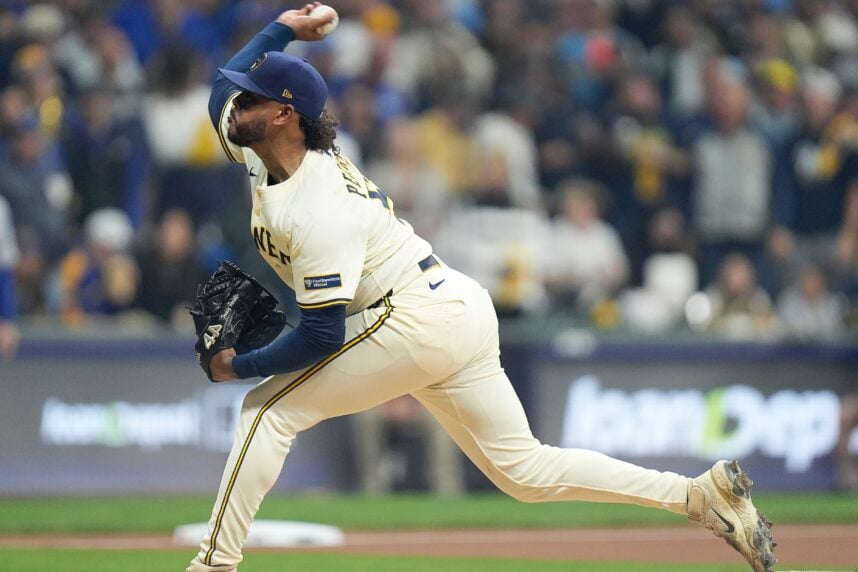
The Brewers do not have to move Peralta. His salary is manageable, and his production is elite. But extensions are hard in Milwaukee, and the number of interested teams only increases his value. Every call raises the bar a little higher.
At some point, the Brewers will have to decide whether holding on is worth more than cashing in.
For the Yankees and Mets, the question is simpler. Starting pitching wins seasons, and Freddy Peralta is the rare arm who offers dominance without financial regret. The teams that hesitate may watch someone else solve their biggest problem in one phone call.